Bordado Stories – The History of Embroidery Around the World and the Vibrant Traditions Behind Every Stitch
Ancient origins in The History of Embroidery Around the World
Embroidery’s roots are fascinating, and in the earliest days people stitched to mend, decorate, and mark important moments. The History of Embroidery Around the World starts long before machines or labels. It began as a practical skill that showed status, protected fabric, and carried meaning in daily life. Here is what archaeology and scholarship reveal about those first stitches and how they shaped what followed.
Early needlework in Egypt and China
In Egypt, linens bearing careful stitches hint at a culture that valued detail. The stitches reinforced fabric in a hot, dry climate where fibers wore quickly. In China, textile work began with practical needs and grew into a refined craft, with delicate motifs stitched in fine threads that would influence many Eastern textile traditions. These early efforts laid the groundwork for techniques, patterns, and tools that echoed across continents. The broader family of global techniques includes Mountmellick embroidery, the Irish whitework tradition, and Indian Kantha, the running-stitch tradition of Bengal.
Archaeological finds and dates
Dating embroidered pieces isn’t simple, but important finds offer a road map. Some of the oldest textiles come from tombs and settlements where dry or sealed environments preserved fabric. The stitches reveal clues about origin, users, and common tools. Radiocarbon dating and craftsmanship analysis help place these works on a timeline, showing embroidery’s arc from necessity to art. Each find adds to the story of how embroidery traveled, spread, and evolved.
Key facts about early embroidery
- Early embroidery blended function with art, turning repair into decorative craft.
- Materials included linen, wool, and cotton threads.
- Techniques such as running stitches and backstitches were standard.
- Motifs reflected daily life, beliefs, and status, making embroidery a cultural record as well as garment feature.
Mexican and Latin American embroidery styles
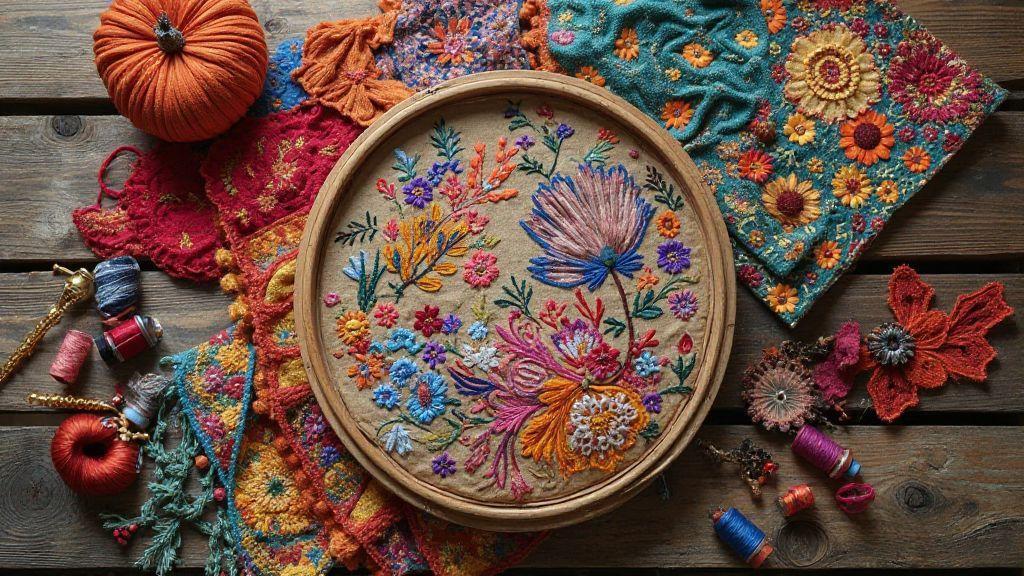
Across Mexico and Latin America, embroidery becomes a voice for communities. Otomi embroidery, a notable Mexican tradition with bold color and motifs, tells stories of land, family, fiestas, and daily work. Bold color, dense stitches, and meaningful motifs turn a simple piece of clothing into a map of culture. These textiles are worn, passed down, and kept alive through communal stitching nights and small family markets. The color choices relate to place—reds and greens for local crops or holidays, blues and yellows for sky and sun. Stitches such as chain, cross, and satin are chosen for durability and read differently up close versus from a distance.
In classrooms and markets, these traditional motifs travel into modern fashion, proving embroidery isn’t a relic but a living craft. Designers remix motifs with contemporary cuts, creating garments that honor history while feeling current. The balance of preserving old stories and inviting new voices is the magic of The History of Embroidery Around the World at work.
Traditional motifs in Mexican and Latin American embroidery
Colors and symbols carry meaning—birds, flowers, and geometric shapes often stand for life, growth, fertility, and nature’s cycles. Sun symbols celebrate harvests; rain motifs signify renewal. Motifs come from generations of sleeves, hems, and shawls, stitched to mark milestones or protect the wearer. Regional tweaks persist, but the storytelling thread remains constant, giving these pieces a sense of continuity and trust.
I’ve noticed how some regions favor dense embroidery at the neckline, others decorate cuffs or hems with tiny motifs. Thread choice matters: cottons and silks behave differently, altering how a pattern reads up close or from a distance. A blouse with embroidered roses, for example, can recall a grandmother’s garden and patience in threading a needle. Motifs migrate and are reinterpreted with local colors or borders, keeping the tradition flexible and alive.
How bordado stories embroidery history appears in dress
Bordado details appear as small but telling marks—veins along a neck panel hint at growth; a star near the shoulder may signal guidance. The rhythm of stitches—tight clusters for emphasis, looser lines for movement—are deliberate choices that tell a wearer’s journey or a community’s pride. As a dress moves, embroidery breathes with it, suggesting lineage on a sleeve hem or a festival on a central panel. The maker’s statements—this is about the river that feeds our town or this flower honors a grandmother—live in the fabric, a portable memory worn close.
Notable regional examples
- Oaxaca: Blusas with vibrant flowers and insects in tight, detailed stitches; layered stitching creates depth that makes motifs pop.
- Chiapas: Geometric borders and narrative panels that feel like a map of the land; animals and village scenes stitched with symmetry.
- Guatemala: Bright palettes on huipiles, with motifs along the neckline and chest that signal ceremonial dress and intention.
Traditional embroidery techniques and stitches
Traditional embroidery remains foundational to both historical and contemporary work. Here is a concise guide to the core techniques and practical tips that give embroidery its classic look and feel.
Common stitches: satin, chain, cross
- Satin stitch: Fills areas smoothly; stitches are even and snug for a polished surface. Use fine thread for delicate work or thicker thread for bold color blocks. Ensure no gaps to avoid showing fabric.
- Chain stitch: Adds a hand-stitched charm with linked loops. Place along edges to emphasize motion; keep the back tension slightly loose to prevent puckering.
- Cross stitch: A reliable pattern stitch that creates a grid-like, pixel effect. Work with even tension and start from the center to avoid misalignment. Can be done with one or two strands for different boldness.
Materials, needles, and threads used
Choose a sturdy hoop and fabric with some bite (cotton or linen). Cotton embroidery floss offers a broad color range and easy handling; silk or metallic threads provide sheen for special accents. Keep neutrals handy for shading. Use a sharp needle for tight weaves and a tapestry needle for loosely woven fabrics. For satin stitches, a thinner needle helps; for chain and cross stitches, a regular embroidery needle works well if it’s sharp.
When selecting threads, test colorfastness on scrap fabric first. Avoid twisting threads too tightly to prevent knots and tangles.
Technique tips and notes
- Keep stitches evenly spaced; even tension prevents uneven rows.
- For chain stitches, monitor loop height with a light guide beneath the fabric.
- For cross stitches, work grid by grid to maintain alignment.
- Secure thread ends with a single knot at the start and finish, then weave tails under a few back stitches. Trim carefully to keep the front clean.
- Gently remove marks after finishing to protect fabric color.
Folk patterns and the cultural significance of embroidery
Folk patterns tell stories without words. They are living memories handed down by grandmothers and aunts, adapted over time but tied to place and purpose. When you see a traditional scarf or wall hanging, patterns of color and line speak of family, village, or festival. Embroidery keeps culture visible in daily life, stitching identity into fabric.
Folk patterns teach patience—their slow, deliberate work mirrors a community’s rhythm of harvest and markets. Motifs embody local flora, animals, and tools, and certain stitches mark rites of passage or seasonal celebrations. Studying a piece reveals how people lived, traded, and celebrated together, thread by thread.
Embroidery serves as a bridge between elders and younger makers. Motifs travel from village to village, evolving with each hand that holds the needle. Reused motifs are often reinterpreted with local colors or borders, keeping tradition alive and flexible.
Common symbols and their meanings
Symbols matter. A rose can signify love or beauty, but in another place it may refer to a local flower. A star can signal guidance or protection, a bird can mean freedom or harvest. Meanings shift with region and history, so reading a piece requires understanding its local context. Some symbols recur across cultures, suggesting shared human themes—geometric patterns can reflect mathematical traditions, while floral motifs point to nature and growth. Reading symbols respectfully also protects the maker’s intent.
Additionally, Palestinian Tatreez cross-stitch speaks as a language of resistance and identity.
Embroidery in rituals, identity, and trade
Rituals weave embroidery into ceremonies—weddings, funerals, or harvests—where borders or colors carry blessings or messages for the spirit world. Embroidery also marks identity: a family badge or village crest signals belonging and can travel with people as they migrate. Traders used motifs to signal quality or origin, building trust through visual language. When buying, look for stitching consistency, maker’s signature, or region-specific symbols to gauge authenticity.
Patterns to watch for
- Border motifs and stitch density can reveal a family’s signature style or festival pieces.
- Color groupings indicate celebratory wear or memorial items.
- Repeating grid patterns suggest workshop traditions with many hands on the same design.
- The way thread is laid—satin fills, cross stitches, or chain stitches—speaks to the maker’s training and tools.
- Worn borders with crisp interiors hint at heavy daily use.
Inspiration for new pieces can be drawn from patterns inspired by world traditions, such as the free folk-art embroidery patterns inspired by world traditions.
Storytelling through embroidery traditions around the world
Embroidery is a vehicle for days, dreams, and duties. Every pattern carries a memory—from Central Asia’s bold geometry to Europe’s delicate floral lace. Working with needle and thread translates a village’s history into a tactile language that can be touched and worn. The histories behind these stitches are living voices, mapping migration, seasonality, and status through color choices, stitch density, and worn edges.
Travel and study reveal how embroidery supports memory, marks rites of passage, and becomes a portable family archive. The History of Embroidery Around the World isn’t a fixed record but a chorus of regional stories that echo similar ideas of ornamentation, storytelling, and status indicators expressed through thread.
Narrative textiles and memory keeping
Textiles are memory keepers. Each panel or sleeve holds moments—births, marriages, harvests, prayers. A shawl can remember a grandmother’s kitchen; a sampler catalogs a child’s first steps. Memory keeping through embroidery emphasizes intention—colors echo a family home, small details trigger memories. Stitching can be healing, turning the textile into a personal diary that travels with the maker.
How I read stories in stitches
Reading stories in stitches means noting motifs, colors, and wear patterns. A family crest, a bird, or a plant can signal lineage, beliefs, or daily life. Technique matters: hand-knotted textiles may signal travel or scarcity; embroidered lace may point to ceremonial use. Stitch density reflects time and care, revealing how long someone spent keeping memory intact. When unsure, imagine the maker’s life—hands at work, breath, light—so the piece remains connected to its maker.
Travel and study reveal how embroidery supports memory, marks rites of passage, and becomes a portable family archive. The History of Embroidery Around the World isn’t a fixed record but a chorus of regional stories that echo similar ideas of ornamentation, storytelling, and status indicators expressed through thread. For broader technique guidance, see the running stitch page for foundational practice.
Textiles are memory keepers. Each panel or sleeve holds moments—births, marriages, harvests, prayers. A shawl can remember a grandmother’s kitchen; a sampler catalogs a child’s first steps. Memory keeping through embroidery emphasizes intention—colors echo a family home, small details trigger memories. Stitching can be healing, turning the textile into a personal diary that travels with the maker. For a digital approach to archiving designs, see how to turn any photo into an embroidery pattern.
Reading stories in stitches means noting motifs, colors, and wear patterns. A family crest, a bird, or a plant can signal lineage, beliefs, or daily life. Technique matters: hand-knotted textiles may signal travel or scarcity; embroidered lace may point to ceremonial use. Stitch density reflects time and care, revealing how long someone spent keeping memory intact. When unsure, imagine the maker’s life—hands at work, breath, light—so the piece remains connected to its maker.
Preserving hand embroidery heritage and global embroidery styles and motifs
A single stitch can carry a village’s stories across generations. Preserving hand embroidery means protecting techniques, threads, and patterns that bind people beyond borders. When learning a new style, I observe its rhythm—the way a running stitch becomes a landscape, or how color echoes climate and crops. I document knots, fabrics, and motifs like geometric bands or floral crescents, and I share techniques with younger makers to keep the craft relevant while honoring its roots. Teaching neighbors to thread a needle can spark pride and a sense of duty to protect these skills for future makers. The History of Embroidery Around the World lives not just in books but in hands repeating the old steps with care.
I work with communities to map local embroidery styles and motifs. In workshops, makers document pattern origins and who taught them. This isn’t just art; it’s a cultural map. Styles travel, evolve, and form the living heartbeat of embroidery. A motif from one country can become part of another tradition through shared stitches, colors, and meanings. Preserving these layers safeguards both technique and memory, so future generations see how a piece grew from a single thread to a chorus of voices. Digitizing patterns and stitch libraries helps prevent loss if fabrics fade or threads break. It’s about keeping the dialogue between past and present open and active. We can also explore pattern ideas by turning photos into embroidery patterns.
Maintaining a global conversation about embroidery helps everyone learn. By celebrating styles from Africa, Asia, the Americas, and Europe, we honor many teachers at once. Exchanges where artisans share motif creation with different stitches or color palettes strengthen technique and keep motifs alive in new forms. It’s not about copying; it’s about understanding why a pattern works and how it tells a story. Preserving these threads protects craft communities and invites new makers to contribute their voices to the ongoing tapestry. The History of Embroidery Around the World becomes a living guide, not a dusty bookmark.
Community projects, museums, and education
Work with local schools and cultural centers brings embroidery into everyday life. Community projects turn needlework into a thread of connection, teaching patience, pride, and collaboration. Open studios let beginners learn basics while seasoned makers mentor on tension, fabric choice, and color mixing. Public exhibitions reveal embroidery as a living art, not a relic behind glass. Museums curate collections that tell region-specific stories through textiles, and visitors respond with renewed interest when they see the steps behind traditional borders or regional motifs.
Education programs partner with elders who carry long memories of patterns and methods. Direct learning from experienced makers brings nuance to stitch and intention. Hands-on demonstrations, short workshops, and day-long sessions create a continuum: knowledge passes, skills sharpen, and confidence grows. In these projects, techniques are documented, samples stored safely, and easy guides produced for future learners. The aim is to empower communities to carry their embroidery heritage forward with care and accuracy, so styles aren’t lost to time. Museums gain fresh stories and new audiences eager to connect with craft. For practical tool guidance, see how to choose the right embroidery hoop for your project.
Pop-up exhibits and outreach events bring embroidery to markets, libraries, and parks. Seeing a hoop, a needle, and bright thread in action sparks curiosity, turning onlookers into potential makers. Education programs then provide beginner kits and short lessons to keep the spark alive. By weaving community projects, museums, and schools together, we create an ecosystem where embroidery is practiced and passed on.
History of embroidery worldwide
The History of Embroidery Around the World weaves connections across cultures. It is a chorus of regional stories—ornamentation, storytelling, and status indicators—expressed through thread. From ancient garments with geometric bands to elaborate ceremonial pieces, embroidery traces how people lived, traded, and celebrated. I study tool evolution—from bone needles to metal eyes—and how fabric choices reflect local resources. Patterns travel trade routes, mingle with local flora and fauna, and adapt to new garments. Indian zardozi motifs influence Middle Eastern textiles; European satin stitches blend with Asian beadwork in modern hybrids. This cross-pollination keeps embroidery fresh while preserving its roots.
The social context matters too. Some stitches signified rank or faith; others marked community identity or personal memory. Recognizing these meanings helps us approach pieces respectfully and accurately. Research provenance, collect oral histories, and preserve maker notes so future generations can trace the original stories. By situating technique within culture, we protect more than the thread—we protect the memory of communities that shaped embroidery. The History of Embroidery Around the World is a living archive that grows when we stitch with intention.
Resources for care and learning
- Quick care guides cover washing, storage, and color preservation for common fibers like cotton, wool, silk, and linen. Emphasize gentle handling and air-drying to extend life; note climate considerations to tailor care.
- Starter learning paths map beginner stitches, basic color theory, and simple motifs with short exercises to build confidence. Include tips on avoiding puckering and choosing the right needle for different fabrics.
- Reference sheets summarize motifs, meanings, and brief histories to connect technique with culture; include notes on regional variations to spark curiosity.
- Safe storage tips emphasize keeping textiles away from direct sunlight and pests, using acid-free boxes and breathable wraps; note appropriate humidity levels.
- Curated reading lists and online tutorials guide continued learning, with guidance on reliability and cultural sensitivity. Point readers to museum catalogs and community archives for authentic examples and context.
The goal is simple: make care and learning accessible so embroidery stays alive. May every stitch be intentional, every project teach, and every learner feel a connection to makers who came before. The History of Embroidery Around the World should be a doorway, not a museum corner. For practical how-tos, explore guides on transferring patterns onto fabric, such as transfer paper for embroidery and other related techniques.
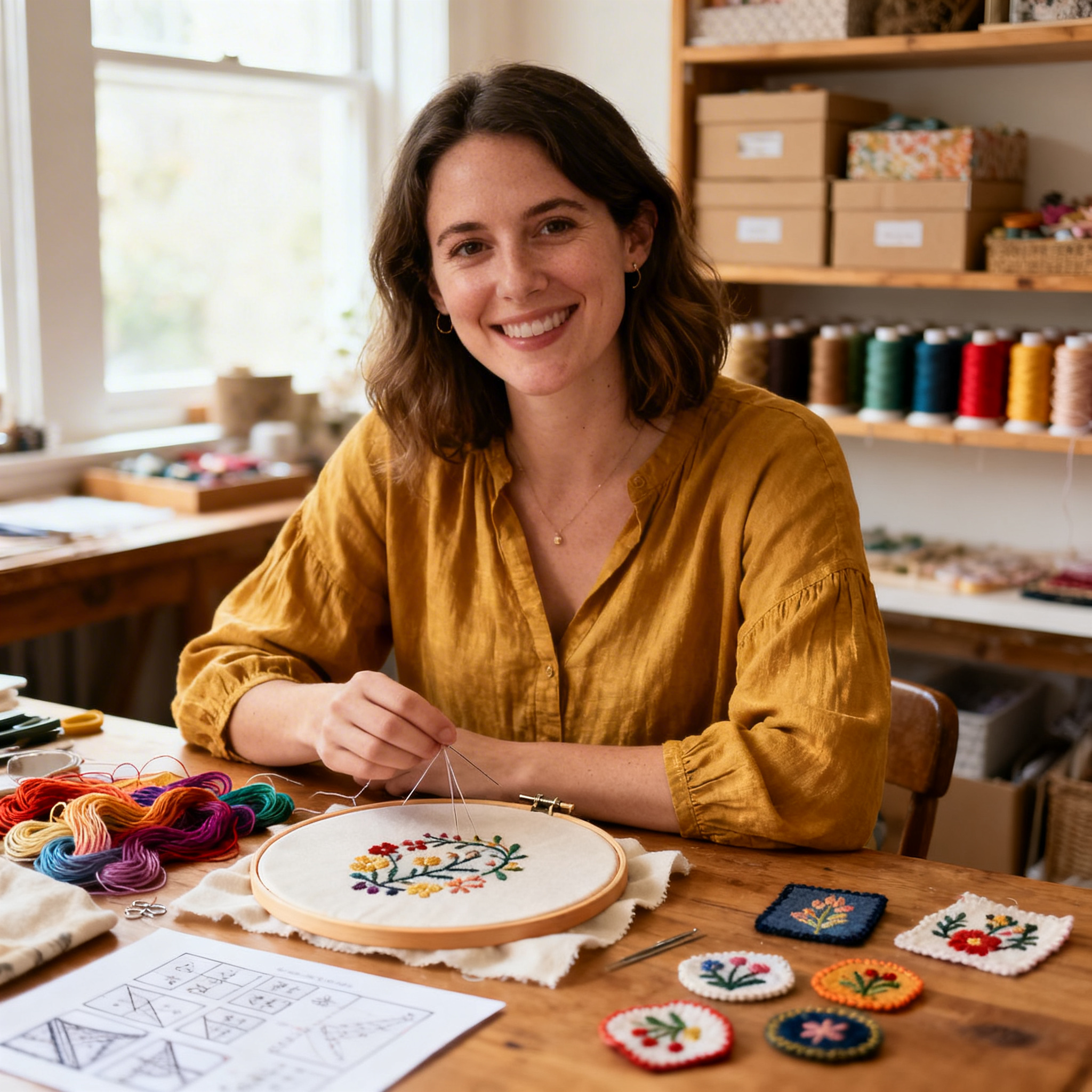
I’m Sophie Caldwell, the author behind granaboom.com, and I believe hand embroidery is one of the simplest, most relaxing ways to create something beautiful with your own hands. I started this blog to help beginners learn hand embroidery without feeling overwhelmed by complicated instructions or “perfect” results.
Here you’ll find beginner-friendly guides to decorative embroidery stitches, along with clear step-by-step practice ideas and patterns you can use to build confidence. My focus is on making the learning process easy: simple explanations, helpful stitch combinations, and small projects that look polished even when you’re just starting out.
Welcome to granaboom.com—grab your hoop, choose a few colors, and let’s stitch one line at a time.