Word and Quote Embroidery Patterns: Free Typography Templates
Where you can find free typography embroidery templates
You’re after easy, ready-to-use designs, and free typography embroidery templates help you skip the guesswork. This guide shows where to start your search and how templates fit into your projects. You can find fonts that match your vibe—from bold block letters to delicate cursive—and see how text shapes transform a plain tote or hat into something personal. The best part is you don’t need fancy software to begin; templates often come in simple, printable formats you can tape to fabric or load into an embroidery machine.
Think about your project timeline as you explore. Free typography templates come in formats like printable patterns you can trace, SVGs for vinyl cutting, or machine-ready files. You’ll find a wide range of styles and letter spacing, so pick something that fits your garment, bag, or pillow. You’re not committing to one look forever—you can tweak by swapping fonts, adjusting size, or mixing phrases, all within your budget. Your end result should feel like you—clear, confident, and a little fun. Word and Quote Embroidery Patterns: Free Typography Templates give you versatile options for any project.
Keep in mind that not every free option works on every fabric. Some templates print best on sturdy materials; others suit delicate fabrics. Check size guidance and suggested stitch types to avoid crowds of tiny stitches that fray edges. As you practice, you’ll learn which designs behave well on your chosen fabric and which to save for later.
Top sites that offer free typography embroidery templates
You’ll find plenty of strong starting points online. Major crafting blogs often round up free typography embroidery templates that are easy to print and use. Look for sources that clearly label file type, size, and fabric recommendations. A good source offers a mix of bold, playful, and script options so you can pick a look that fits your project without paying a dime. Word and Quote Embroidery Patterns: Free Typography Templates are often curated around popular sayings or quotes, with different layouts ready to test on your fabric before you thread up.
Bookmark your favorites so you can return when a new project arises. Word and Quote Embroidery Patterns: Free Typography Templates make it quick to test options and plan your layout.
How you safely download printable word embroidery templates
Protect your computer and projects by using reputable sites and scanning downloads for viruses. Save files in a dedicated folder organized by project, and keep a copy of the original if multiple formats are available. Before loading a template into your machine, check the file’s details: stitch count, hoop size, and file type should match your equipment. If something looks off, move on to a cleaner file. The phrase Word and Quote Embroidery Patterns: Free Typography Templates often appears in reputable sources as a category of templates—verify licensing before use.
Check licensing and print quality before use
When you’re ready to print or stitch, check the licensing first. Some free templates are for personal use only; others cover commercial projects. If you’re sewing for yourself or gifting, personal-use licenses usually suffice, but confirm. For a future shop project, you’ll need a commercial-use license. Then test print or stitch a small sample to evaluate readability and stitch behavior on your fabric. If lines blur or stitches fray, try a different template or adjust the size. Licensing and print quality keep your project smooth from start to finish.
Pick the right typography embroidery designs for your project
Your final piece should tell a story, not just showcase stitches. Choose a font that suits your theme, fabric, and stitch style. For a playful kid’s backpack, go bold; for a wall hanging, a calm handwritten quote may work better. The font sets the mood—bold for impact, delicate for elegance, or chunky for whimsy—and should balance with your hoop size and fabric texture. Preview how the letters flow together; a good typography design keeps letters connected and readable, even in simple outlines or fills.
Evaluate options by how the letters read up close and from a distance. Avoid fonts with too many tight curves or very thin lines on dense fabrics. If your project is meant to be legible from afar, lean toward sturdy letterforms and higher contrast. For keepsakes viewed up close, you can experiment with more delicate lines. The goal is a harmonious blend of legibility and personality.
If you’re new to embroidery, start with a familiar, well-supported font. If you’re seasoned, push boundaries with decorative touches that still read clearly. The right design will make your words sing on fabric.
Match font style to the word or quote you plan to stitch
Your font should echo the message. A bold, chunky font fits GO or DREAM BIG, while a soft, handwritten style suits love you to the moon. For short quotes, a clean sans serif keeps things readable; longer lines may work with a simple script if you space letters well. Consider mood: sporty, romantic, playful, or serious. The font is your cue to the tone, so pick one that fits.
Also account for fabric texture and thread choice. Thick stitches on rough linen can make a font look heavier; delicate fabrics may highlight fine serifs. If fabric shows through, choose solid shapes and avoid extremely thin strokes. Think about how the font scales; a design that looks great on a small hoop may blur when enlarged. Test at the final display size and aim for crisp, balanced typography.
Contrast matters. A light thread on dark fabric pops, but too much texture can complicate legibility. If unsure, test a small sample on your fabric with the chosen font.
Choose readable free embroidery font templates for small text
Readability is key for small text. Look for generous letter spacing and clear shapes. Free templates often include sans serif and simple script options—great starting points for practice. Choose fonts with robust vertical strokes and edges that stay distinct after stitching.
Print a test at the hoop size to confirm spacing isn’t crowded. Look for templates with adjustable letter spacing to tailor to your fabric and hoop. Having a few reliable, readable options handy saves time on future projects.
Test stitch size and spacing on scrap fabric
Before committing to your final piece, test on scrap fabric with the same thread and stabilizer. Stitch the full word or quote at the intended size and check readability, smooth curves, and any gaps. If lines are uneven or letters blur, adjust size, spacing, or font. Small spacing tweaks can dramatically improve legibility.
Test how your chosen font performs with your fabric density and stabilizer. If texture shows through too much, switch stabilizers or choose a bolder font. If stitches push the fabric, adjust tension or stitch length. Treat this test run as a blueprint for a clean final piece.
Print and transfer printable word embroidery templates easily
Print word embroidery templates to transfer them with ease. Printable templates give you clean lines and quicker stitching, helping your final piece look polished. They also let you map out spacing to avoid crowding. When you print, use standard printer paper or lightweight transfer paper; cardstock works for longer-lasting templates but ensure crisp printing.
Secure the fabric, align the template with fabric edges or a grid, and trace gently. Light pencil marks or erasable pens keep your design clean while you stitch. Word and Quote Embroidery Patterns: Free Typography Templates provide versatile options—you can swap fonts or sizes while maintaining a consistent transfer method for cohesive results.
Best methods to trace, iron-on, or use transfer paper
- Tracing: Place the template on a flat surface, lay fabric over it, and gently transfer outlines with a light pencil or erasable pen. This gives you a tactile guide as you stitch.
- Iron-on transfer: For multi-layer or tricky fabrics, place the template, cover with parchment, and press with a hot, steady iron. Use a teflon sheet on textured fabrics to prevent heat damage.
- Transfer paper: Print, cut letters if needed, and place transfer paper between template and fabric. Transfer with a warm iron or heat press for clean, solid lines.
Use printable word embroidery templates with a stabilizer
Stabilizers prevent puckering and keep letters crisp. Choose weights based on fabric and embroidery method. Tear-away stabilizers work well for lightweight fabrics; stabilizers that stay under stitches help on knits or delicate fabrics. Printed templates with stabilizers reduce drift and keep lines straight. If you’re new to stabilizers, test on scrap to gauge how much to use and where to trim.
Word and Quote Embroidery Patterns: Free Typography Templates often include tips for combining stabilizers or using temporary spray adhesive to hold fabric flat while you stitch.
Stitch techniques that make lettering look crisp
You want letters that stand out with clean edges. Plan your path: lay out letters at the desired size, then choose stitches that hold firmly without puckering. Practice on scrap to see how stitches behave with your thread and fabric, then transfer those techniques to the final piece with steady tension and even spacing.
Consistency helps: use a primary stitch for outlines and a secondary stitch for fills or emphasis. Keep the fabric taut and use a small needle for control. Testing different fabrics shows how background color affects brightness, so always sample on the same fabric.
Texture matters, but length does too. Too-long stitches blur edges; too-short ones look busy. Let stitches flow with each letter’s curve to avoid stair-stepping. Recheck alignment during breaks to avoid a messy finish.
Use backstitch, satin stitch, and split stitch for text
- Backstitch: Bold, continuous lines for sharp text edges.
- Satin stitch: Solid fills that pop; fill evenly for glossy letters.
- Split stitch: Texture without sacrificing readability; good for delicate curves on lighter fabrics.
Tips for monogram and word and quote embroidery patterns
Monograms shine when centered and sized to surrounding space. For words, break long phrases into two or three lines to improve readability. Start with a light backstitch outline to anchor text, then fill with satin or split stitches for crisp edges. Draft layouts on wash-away transfer paper and test color contrast on scraps before stitching on clothing. Pre-wash and stabilize to prevent distortion after washing.
Adjust tension and thread weight for clean letters
If fabric pulls or stitches ripple, loosen tension slightly and re-test. Use medium to heavier threads on sturdy fabrics for bolder lines; switch to lighter threads on delicate fabrics. Maintain consistent tension and steady stitch length for crisp letters.
DIY quote embroidery designs for gifts and home decor
DIY quote embroidery turns simple fabric into heartfelt gifts and cozy decor. Start by selecting a quote you love and mapping it onto fabric with a simple grid or software template to keep balance. The feel of the piece changes with materials—bold script on linen differs from a neat sans-serif on cotton. Match the mood to the room and finish it with framing or display that complements the message. Word and Quote Embroidery Patterns: Free Typography Templates help you explore font options and line breaks to design cohesive pieces.
Plan layout, placement, and framing for your quote
Decide where the quote sits on the fabric—center for a classic look or offset for modern style. Consider hoop height and width to give the text breathing room, and plan line breaks to avoid crowding. When framing, leave extra margins; for hoops or pillows, choose a size that fits the display area. A thoughtful layout highlights the words without overwhelming the design. Pick a color story that suits the room—high contrast pops, while subtle tones feel refined.
Quick projects using free quote embroidery patterns
Start with a small practice piece to test fonts and fabric. A short wall sign or bookmark helps you refine spacing and alignment before scaling up. Move to practical gifts like a mug rug or embroidered bookmark. Free quote embroidery patterns often include grid guides for quick reproduction and consistent results.
Choose fabric and hoop size to suit your design. Cotton works well for towels or pillow fronts; linen adds texture. Match hoop size to the design area—small for a bookmark, larger for a framed piece—and leave extra space around the text for readability.
Customize free lettering embroidery patterns with flair
Transform simple stitches into something personal and bold. Start with a base pattern and adjust size, spacing, and alignment to improve readability and impact. Use color contrasts that pop while staying true to your fabric. Pair a clean sans with a whimsical script for balance.
Trim letter edges for cleaner coverage, and use a light touch on tight curves. Consider a subtle outline or shadow to add depth while keeping the design readable. If unsure, test a small sample on scrap fabric. Finally, ensure the final piece matches the vibe you planned—playful tweaks for whimsy, tighter lines for a professional finish. Your skills grow with each project.
Mix fonts, add borders, and small motifs safely
Choose two compatible fonts: a bold sans for the main word and a lighter script for flourishes. Keep borders simple and place small motifs like stars or hearts near edges to avoid crowding. If it feels crowded, scale back one element.
Test combinations on a mock-up before stitching to confirm readability. Apply the font mix and borders to guide the eye along the message. For phrases, a lowercase version can feel friendlier and work well with greetings or titles. You’re shaping a fabric conversation, so readability and charm should come first.
Convert free embroidery font templates into unique designs
Start with a free font template and tailor it quickly. Adjust letter size, baseline, tracking, and spacing to fit your hoop and stitching style. A simple alias—changing a script to a handwritten look with a slight slant—can refresh the template without losing readability.
Layer lightly behind letters to help them pop on busy fabrics, then remove it if the background is light enough. Save variations to compare and choose the strongest. Name your design clearly and store it with the original template for easy reuse.
Save and print patterns as PDFs for repeated use
Saving as PDFs preserves layout across devices. Create clean, labeled documents with font names, sizes, and stitch types. Include fabric and hoop recommendations when sharing. PDFs ensure consistency so viewers get the same crisp look every time.
Use high-contrast colors and scalable layouts to verify alignment before stitching. For batches, print multiple pages on one sheet to compare options quickly. PDFs become your repeatable reference for reliable results.
Word and Quote Embroidery Patterns: Free Typography Templates—your go-to resource for versatile, design-friendly embroidery projects.
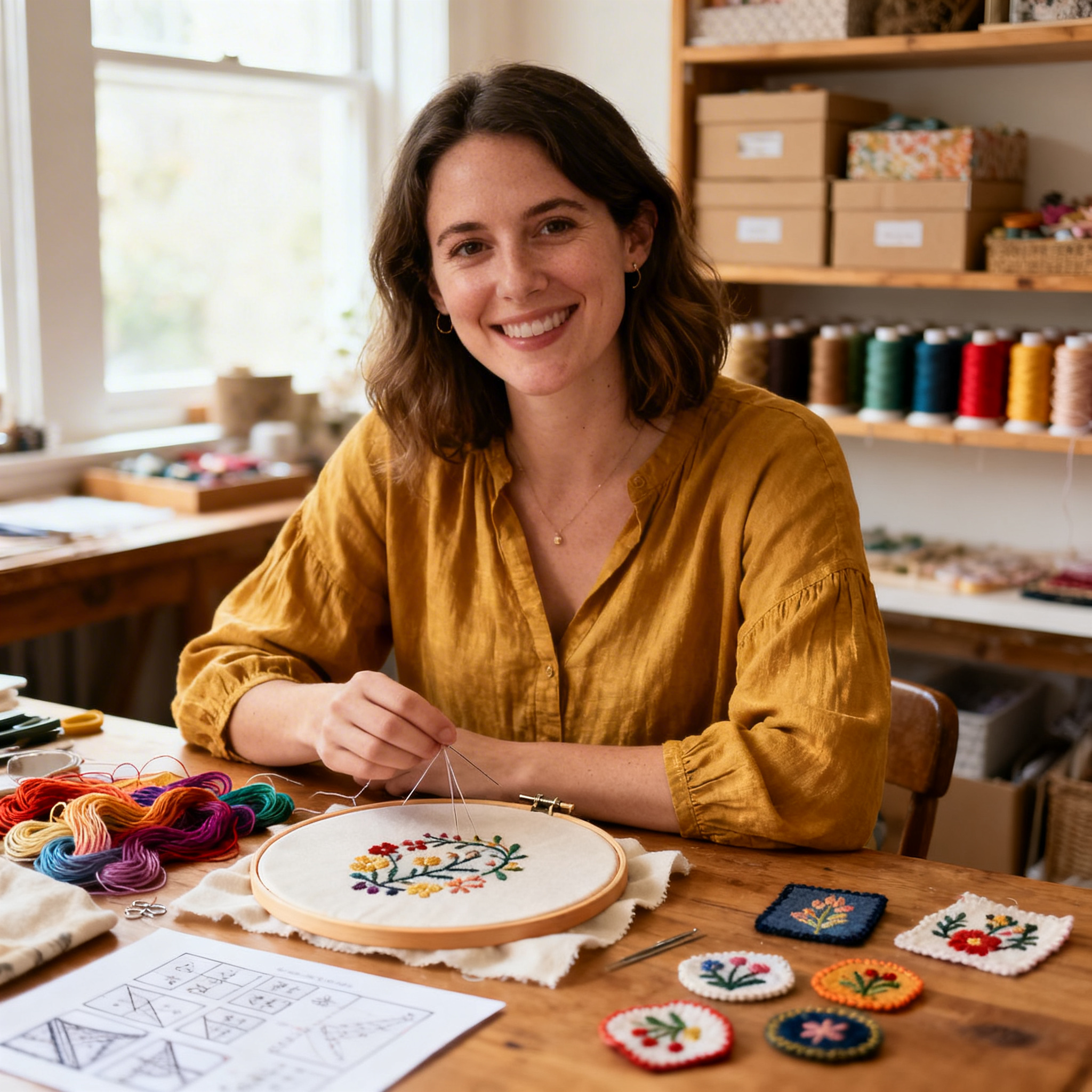
I’m Sophie Caldwell, the author behind granaboom.com, and I believe hand embroidery is one of the simplest, most relaxing ways to create something beautiful with your own hands. I started this blog to help beginners learn hand embroidery without feeling overwhelmed by complicated instructions or “perfect” results.
Here you’ll find beginner-friendly guides to decorative embroidery stitches, along with clear step-by-step practice ideas and patterns you can use to build confidence. My focus is on making the learning process easy: simple explanations, helpful stitch combinations, and small projects that look polished even when you’re just starting out.
Welcome to granaboom.com—grab your hoop, choose a few colors, and let’s stitch one line at a time.