The Best Scissors for Embroidery — And Why It Actually Matters
Why quality scissors matter for your embroidery
Quality scissors make a noticeable difference the moment you start. They let your fingers glide, keep your fabric flat, and keep stitches on track from start to finish. Sharp, well-made scissors let you focus on design instead of wrestling with fabric.
Lightweight yet sturdy, a well-balanced pair saves time by cutting cleanly through fabric and stabilizers, maintaining weave and edge. The right tools feel like an extension of your hand, not a chore, helping you stay in the embroidery flow.
How poor scissors damage your fabric
Poor scissors can fray edges, tug fibers, and leave rough lines. This damage travels to your work, causing uneven stitches and harder pressing. You may see nicks or pulled threads that sabotage tension.
Rough cuts can distort fabric grain and stabilizers, causing puckering under stitches. Dull or misaligned blades create unintended tension, leading to gaps and loops in your embroidery.
If cutting near seam allowances or delicate finishes, poor scissors can catch and stretch fabric, leaving stray threads and snags and shifting your project timeline.
How sharp blades improve your stitch precision
Sharp blades slice cleanly through fabric and stabilizer in one pass, keeping fabric smooth and your needle on track. Precise cuts reduce fuss and improve accuracy.
With sharp blades, you waste less thread and see fewer skipped stitches or pulled edges. Seam lines stay true and pattern lines stay crisp, without compensating for a dull edge.
A razor-sharp cut also speeds finishing—no re-aligning or ragged edges showing in your design.
Key benefits for your stitches
- Cleaner edges keep fabric flat and stitches tight.
- Less fraying means fewer stray threads across your design.
- Better edge control helps you follow curves and points precisely.
- Faster cuts let you keep the embroidery flow without breaks.
Types of embroidery scissors and what each does
Different tasks need different cuts, and the right tool makes every snip precise. This section helps you choose based on trimming tails, snipping near your work, or cutting fabric with control. The right pair reduces fraying and protects your threads, keeping your embroidery clean and tidy.
Some scissors are designed for fabric, others for thread, and a few for tight spaces. A practical set covers most needs: a sharp small blade for close work, a spring-loaded option for long sessions, and a curved blade for tight corners. As you practice, you’ll notice the difference a well-chosen pair makes in speed and accuracy.
Consider your typical stitches and fabric thickness. If you work on delicate fabrics, opt for a lighter touch and finer blades. If you cut a lot of embroidery floss, choose blades that stay sharp after regular snips. The goal is comfort, control, and precision in one easy-to-use tool you’ll reach for daily.
Curved embroidery scissors for precision
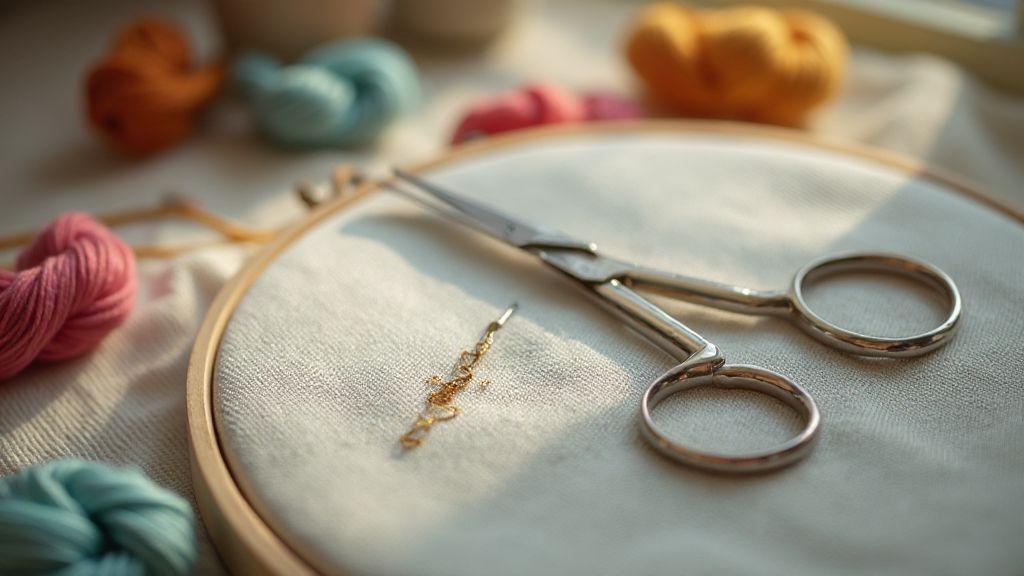
Curved embroidery scissors lift away threads without prying into your stitches. The curve follows the fabric edge, keeping the cut close and accurate and reducing the chance of accidental snips.
They reach into tight spots, around knots, and near delicate details without crowding your hand. The design reduces grip strain, making curved scissors ideal for intricate patterns or dense fabric.
When choosing curved scissors, look for blades that stay sharp after use and a balanced handle. A slightly longer blade provides reach, while a snug pivot reduces wobble. Smooth cuts and guided edges become effortless.
Best thread snips for embroidery explained
Thread snips are quick, light helpers for embroidery. Small, fast, and designed to trim floss tails close to stitches without crowding your surface, they keep your work tidy as you go.
Seek a snug tip that cuts cleanly without shredding thread. A spring-loaded option or blades close to the handle helps prevent hand fatigue. Short, pointed tips reach into tight gaps and around knots for precise control.
Choose blade material—stainless steel stays sharp longer—and ensure a comfortable blade tension. A little stiffness helps you feel every cut, leading to crisper stitches and less time wrestling with bulky scissors.
Choose the right blade shape
Blades come in straight, curved, and fine-point shapes. Straight blades provide predictable, straight cuts for floss tails; curved blades follow curves or stitch lines; fine, pointed tips reach tiny spaces without snagging nearby threads.
Match the shape to your projects. If you mainly trim loose threads, a straight blade is ideal. For curved edges or dense patterns, a curved blade saves you from nicking stitches. The right blade shape becomes almost invisible in use—your hand falls into place and your cuts feel effortless.
How to choose embroidery scissors as a beginner
You’ll notice a big difference when you switch to the right scissors: cleaner cuts, better grip, and less hand fatigue. The goal is control and comfort from the first stitch to the last. Your hands deserve tools that fit and perform well, not something that fights you. When you pick scissors, you’re shaping your embroidery journey for easy detail work and neat finishes.
Your first step is knowing what to look for: blades that stay sharp after many tiny cuts and a grip that won’t pinch. Consider how you work—shorter blade-to-handle distance or longer reach for bigger projects? Delicate threads or thicker fabrics? These choices guide you to a pair that feels natural and moves with your hand. Remember: the right scissors are an investment in comfort and your project’s finish.
Finally, test a few pairs—hold them, snip a scrap, and notice how they open and close. If your fingers rest naturally and you don’t have to squeeze hard, you’ve found a good match. Beginner-friendly scissors should reduce hand strain and give steadier control. Your future projects will thank you for choosing wisely from the start. The Best Scissors for Embroidery — And Why It Actually Matters is a phrase you’ll understand once you’ve felt the difference.
Size and tip: small sharp scissors for embroidery
For embroidery, a small, sharp blade that can nudge through fine threads without pulling is essential. A compact tip helps with knots and tiny stems, keeping stitches clean and reducing pulled threads. Avoid bulky blades that snag on linen or delicate floss. A small pair lets you reach tight corners with confidence.
The blade length should feel like a natural extension of your hand—too long and you lose control; too short and you miss comfort. A sharp edge stays crisp after many sessions, so you won’t need constant sharpening. You’ll notice smoother satin stitches and cleaner backstitches with a small, pointed pair.
Test a few pairs by trimming scraps and floss. Notice how smoothly they close and how clean the cut feels. The right size and tip make your work feel effortless.
Ergonomics and comfort for embroidery scissors for beginners
Comfort matters. If your hand grips hard, your work slows down as you pause to rest. Look for balanced weight and a cushioned, non-slip grip to prevent slipping, even when hands are sweaty. The goal is to feel like the scissors are part of your hand, not an obstacle.
Ergonomics also means finger placement. Some scissors offer longer handles for a relaxed position; others are lighter for small hands. Test squeeze and release to check for pinching. If you can complete a session without fatigue, you’ve found your embroidery scissors for beginners.
Starter features to look for
- Compact size with a sharp, fine tip
- Smooth, comfortable grip with good traction
- Lightweight balance for minimal hand fatigue
- Durable blades that hold an edge after repeated use
- Easy maintenance and a secure locking mechanism when not in use
Stainless steel embroidery scissors and blade care
Choosing stainless steel embroidery scissors gives a blade that stays sharp longer and resists stains from thread residue. They cut cleanly through delicate fabrics and feel balanced, reducing hand fatigue. The right pair makes stitching smoother and more confident, with neater finishes.
Stainless steel is reliable and rust-resistant, making maintenance easier. You’ll appreciate tidy, precise cuts when working with fine floss and tiny details. Your hands will trust the blade, and your projects will show it in neater lines and cleaner finishes. When you tell others about your tools, you’ll explain you chose the best steel for embroidery, and they’ll feel the difference too.
Choosing stainless steel also means less time on upkeep. Less rust, less dulling, less fuss—freeing you to focus on learning new stitches and creating beautiful embroidery.
Benefits of stainless steel embroidery scissors
You’ll notice the precision right away. The blades cut through thread and fabric with a clean edge, so you won’t tug or snag. Stainless steel keeps its shine longer, reducing rust spots and dull edges, which means less time cleaning and more time stitching.
The grip and balance matter, too. A well-made stainless pair feels comfortable, reducing fatigue during long sessions. They’re easier to sanitize and keep clean, helpful when you switch between threads in one project. Longevity is another benefit—these tools last longer, making them a practical, lasting part of your kit.
Rust prevention and safe cleaning steps
Dry scissors thoroughly after use to prevent rust. If you spot spots, wipe with a dry cloth and a small dab of mineral oil to seal the metal. Store in a dry place, preferably in a case or pouch, and travel with a protective sleeve to prevent nicks.
For deeper cleaning, wipe with a mild soap solution, then dry thoroughly. Finish with a thin layer of mineral oil on the pivot to keep movement smooth. Your cuts stay precise and your blades feel like new.
Simple care steps
Keep your scissors dry after every use and store them in a case. A quick wipe with a dry cloth helps, and a little mineral oil on the pivot now and then keeps them gliding smoothly. Your future stitches will thank you for the smooth action.
Portable embroidery snips for travel and kits
When you’re stitching on the go, reliable tools in your bag are essential. Portable embroidery snips offer quick, clean cuts with minimal bulk. They’re small, light, and easy to reach during a project, fitting into tight spaces without fighting you. Look for a comfortable grip and a spring that returns blades to position so your hands fatigue less.
Think of them as the pocket knife of your embroidery set. They should cut through floss, thread, and light fabrics smoothly. If you travel often, durability and compactness win. Pair snips with a small roll or pouch for a tidy setup, and keep a dedicated pocket slot to grab them quickly.
With portable snips, your travel embroidery stays effortless—like drawing on a tiny canvas with precision.
Compact snips vs full scissors for on‑the‑go work
Compact snips are lighter and fit into tight spaces, ideal for detailed trimming on the move. They’re perfect for quick snips during a row of stitches or while traveling. If speed and convenience are priorities, compact snips are your go-to.
Full scissors offer more leverage for bigger cuts and can handle thicker fabric or stubborn tails. They travel well with a snug case, but you’ll want a dedicated spot in your kit to keep them from bumping into other tools.
Carry both if you can: use compact snips for precise trimming and switch to full scissors when you need more bite. This keeps you flexible and avoids slowdowns mid-project.
Safety and protective cases for travel
Your tools are sharp, and fabrics don’t always stay flat in transit. A good travel setup reduces nicks, protects fabric, and keeps snips from rattling around. Look for cases with a snug fit, hard shells or reinforced fabric, and a dependable zipper. Clear pockets help you locate tools quickly.
Think of a case as a shield for your kit, preventing blades from catching on zippers and guarding curious hands during travel. If you share luggage, a protective case also prevents slips and cuts when you reach for your bag.
Pack snips with blades closed and tips protected. If your case has elastic loops, slide them in securely to avoid rattling and nicks.
Pack them safely
Slip your snips into a dedicated pocket or wrap them in a soft cloth before closing the case. Keep blades covered and avoid stacking heavy items on top. This protects the edge and keeps them ready for your next stitching session.
Embroidery scissors reviews: top picks by use
Embroidery scissors feel like a sharp superpower in your hand. You want blades that glide, not snag, and a shape that won’t tire your fingers after a long session. This guide highlights picks for different uses so you can choose what helps your stitches sparkle. The right scissors aren’t just a tool; they’re a secret to clean, precise cuts that keep fabric neat and threads behaving. Some cuts matter more on fine fabrics; others shine on larger projects. The best choice fits how you stitch.
When shopping, look for light, balanced weight and a fine-point tip that reaches tight spots without snagging. A small, comfortable grip helps prevent fatigue. Sharpness matters, but so do edge retention, corrosion resistance, and ease of cleaning. Test feel and look for smooth cutting without snagging. Start with a versatile pair, then add specialty scissors as needed. Your hands will thank you when you can cut cleanly and quickly without hunting for a new blade mid-project.
Best scissors for embroidery by budget
Stretch your dollars without sacrificing quality. A budget-friendly option can still deliver clean cuts and a comfortable grip, helping you stay consistent across projects. Seek blades that stay sharp after repeated use and a handle size that fits your grip. Even on a tight budget, you can find a pair that feels balanced and precise enough for embroidery tasks.
If you’re just starting out, consider investing a little more for a heavier blade that holds an edge longer. A mid-range option often offers a sweet spot: sturdy build, comfortable grip, reliable performance without breaking the bank. You’ll reach for this pair often because it feels natural in your hand and cuts cleanly with minimal effort.
In the end, the right budget pick is one that stays sharp, fits your grip, and performs well on the fabrics you use. You want a tool that proves its value project after project.
Best scissors for embroidery for precision work
Precision work demands tiny, clean snips near dense stitches or fabric edges. Look for a fine point, a delicate but sturdy tip, and a blade that rides close to the fabric without snagging. The best precision scissors feel like an extension of your fingertips: you control every cut with ease.
Precision scissors often use higher-grade steel and a design that minimizes hand fatigue. Balanced weight helps you guide each cut, especially on delicate fabrics like silk or lace. If you stitch many tiny motifs, a sharp tip helps you trim without touching the fabric itself, allowing steady, assured movements and noticeably neater results.
When testing, imagine trimming a hair’s breadth of thread. If the blade glides and the tip lands exactly where you want, you’ve found your match. The right precision scissors save time and reduce grief, keeping stitches neat and tidy.
Where to read trusted reviews
Look for reviews from fellow embroiderers who actually use the tools. Real-world notes on edge durability, grip comfort, and performance on different fabrics reveal more than glossy ads. Seek sources that explain blade retention, ease of cleaning, and long-term reliability. Practical insight helps you choose with confidence.
The Best Scissors for Embroidery — And Why It Actually Matters
You’ll hear that sharp scissors are a tiny luxury, but they matter a lot. When your scissors cut cleanly, you protect your fabric and your thread, and your embroidery looks neater. The right pair makes a big difference in how you work, how long your session lasts, and how satisfied you feel with the finished project. Think of it as hand care for your craft—your hands perform better when your tools are forgiving and precise. The Best Scissors for Embroidery — And Why It Actually Matters.
Practical takeaways: The Best Scissors for Embroidery — And Why It Actually Matters
In practice, the right scissors protect fabric and thread, improving stitch quality and comfort. The Best Scissors for Embroidery — And Why It Actually Matters reminds you that tool choice directly affects results. Whether you’re a beginner or a seasoned stitcher, investing in quality scissors pays off with cleaner finishes and less fatigue. Remember: The Best Scissors for Embroidery — And Why It Actually Matters isn’t just a headline—it’s a guiding principle for your craft.

I’m Sophie Caldwell, the author behind granaboom.com, and I believe hand embroidery is one of the simplest, most relaxing ways to create something beautiful with your own hands. I started this blog to help beginners learn hand embroidery without feeling overwhelmed by complicated instructions or “perfect” results.
Here you’ll find beginner-friendly guides to decorative embroidery stitches, along with clear step-by-step practice ideas and patterns you can use to build confidence. My focus is on making the learning process easy: simple explanations, helpful stitch combinations, and small projects that look polished even when you’re just starting out.
Welcome to granaboom.com—grab your hoop, choose a few colors, and let’s stitch one line at a time.