Hungarian Kalocsa Embroidery: Bold Florals and Regional Identity
Origins of Kalocsa embroidery
Kalocsa embroidery is a bright thread in Hungary’s cultural tapestry. You’ll notice bold colors and simple shapes that tell stories of village life and seasonal work. The design feels like a memory you can wear, turning everyday fabrics into small works of art. As you explore, you’ll see how the style blends practical sewing with expressive decoration, making every piece feel personal and alive.
The roots run deep in the countryside, where women stitched not just to finish clothes but to record family memories. The threads carry hours of careful work, and the patterns often come from nature you’d see around farms and fields. This is where you start to sense the heartbeat of Kalocsa: practical craft meeting joyful color.
You’ll also sense the social side of Kalocsa embroidery. Women gathered to sew, share tips, and swap fabrics. Those gatherings turned into a shared language, a way to pass on skills to the next generation. The result is a tradition that stays fresh while staying true to its origins.
Kalocsa town and local craft
Kalocsa town sits in a place where river breeze meets flat farmland, and you can feel that mix in the embroidery. Local crafts grew from daily tasks—mending, finishing aprons, and decorating wedding outfits. The town’s studios defined how the stitches looked, from the size of the petals to the way the leaves curved along the fabric. You’ll notice a calm, confident way these designs sit on their fabrics, not shouting but speaking clearly.
In Kalocsa, you’ll see the first big push of store-bought threads meeting handmade skill. The colors—bright red, clear blue, sunny yellow—are chosen to catch the eye, then balanced with white spaces that keep the look neat. This balance is key: bold florals framed by quiet backgrounds make the embroidery easy to wear, no matter what you pair it with.
Today, you can still visit workshops where artisans keep the old methods alive. They show you how to properly knot a thread, how to lay stitches so the design stays flat and sturdy, and how to pick colors that won’t fade in sunlight. It’s practical craft with care, and you feel that care in every careful stitch.
Spread within Hungarian folk embroidery
The Kalocsa style didn’t stay put. You see its flowers and leaves appear on blouses, aprons, and table linens across Hungary. The spread happened partly because travelers and traders shared pieces and patterns, and partly because families passed styles to daughters who moved to nearby towns. So you end up with a family look across regions, even when the fabrics change.
As it traveled, the Kalocsa language learned to speak with local terms and fabrics. You might find similar shapes, but the colors or spacing shift to fit a new climate or a dress cut. Still, the core idea stays the same: big, friendly flowers that tell a story of home, work, and celebration. The embroidery keeps its sunny character, just with a touch of local flavor.
This diffusion wasn’t just about copying. It was about adapting while keeping the heart of Kalocsa alive. You’ll notice recurring motifs—bold petals, curving vines, tiny stems—that remind you where the style began. The result is a shared yet varied embroidery tradition you can spot from town to town.
Early timeline
- You can trace Kalocsa embroidery to the late 19th century, when practical sewing met artistic color.
- By the early 1900s, women were refining petal shapes and leaf lines, making the flowers look friendlier and larger on garments.
- In the 1920s and 1930s, workshops formalized patterns, and schools taught the stitches, ensuring the craft survived changes in fashion.
- After World War II, the style found new life as folk art revived interest in regional costumes, helping Kalocsa become a symbol of national pride.
These milestones show how the craft grew from everyday sewing into recognizable regional identity. You can picture a small village room, fabrics laid out, and a mentor guiding a newer artist through a bold red outline before filling in the colors.
Bold floral motifs and folk art symbolism
You’ll notice how bold floral motifs carry stories in traditional embroidery. When you choose designs, you’re not just picking pretty shapes—you’re inviting meaning into your textile. The florals act like a language you can read and speak with every stitch, making your piece feel alive and connected to generations of makers. In practice, this means you’ll see large, confident blossoms that grab attention and remind you of gardens, fields, and shared village gatherings. Your work becomes a conversation starter, a small memory you carry into everyday life.
Think about how the motifs sit on fabric the way a strong chorus sits in a song. The placement matters: a single bold bloom can anchor a sleeve or collar, while a cluster around a neckline can echo a folk dance’s rhythm. You’ll notice the balance between negative space and bright color. This balance isn’t random—it’s a carefully honed tradition that helps your embroidery breathe and feel intentional. When you stitch, you’re balancing energy, memory, and personal taste into one vivid piece.
As you sew, you’ll feel the weight of tradition push you toward certain shapes and curves, yet you still have room to make it yours. Bold florals make your work instantly familiar to anyone who recognizes folk art, while your personal touches give it a fresh spark. You’ll enjoy the confidence that comes from knowing you’re continuing a long line of makers who turned simple threads into powerful stories. Your piece can be both a tribute and a statement, all at once.
Kalocsa floral designs you see
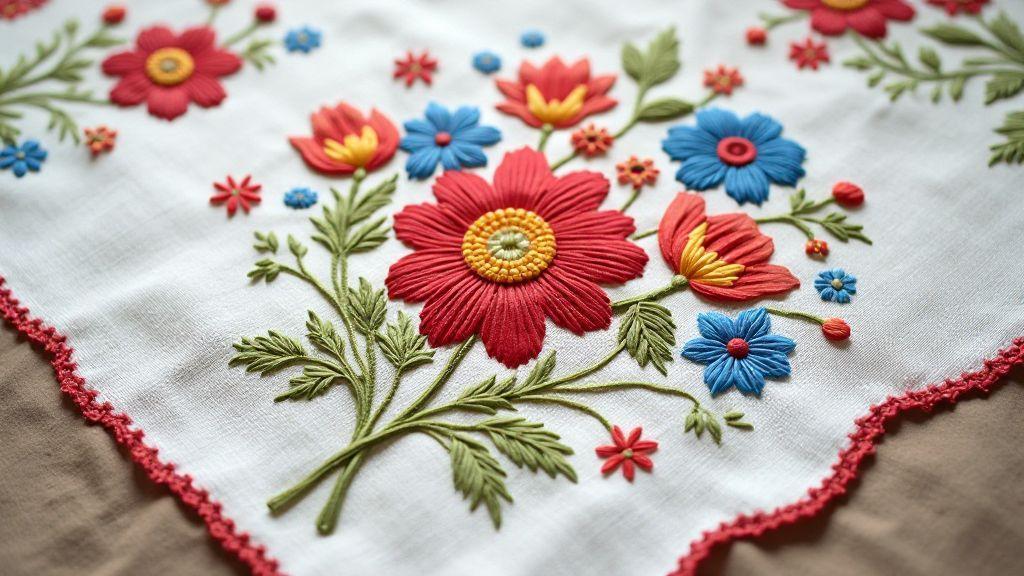
Kalocsa designs pull your eye with bright petals and sweeping lines. You’ll see big blossoms that feel like they’re dancing across the fabric, surrounded by tight leaves and curling stems. The look is unmistakable: motion, color, and a hint of play. When you spot Kalocsa florals, you recognize that every stitch is intentional, every color chosen to sing together. The effect is instantly cheerful and bold, yet balanced enough to wear on any occasion.
These Kalocsa patterns often feature symmetry that pleases the eye and a rhythm that makes you want to trace the curves with your fingers. The petals aren’t shy; they push forward, carrying sunlight and warmth into your project. As you replicate or reinterpret them, you’ll notice how the shapes fit together like a puzzle, teaching you about proportion and harmony. You’ll likely adopt the characteristic round petals and tight, leafy accents that define the style.
Kalocsa embroidery invites you to settle into a rhythm. You’ll feel inspired to layer color, to let one dominant hue lead and let others support it. This approach keeps your piece lively without becoming chaotic. By studying Kalocsa, you learn to balance tradition with your own voice, so your work feels both authentic and personal.
Meanings in folk art symbolism
You’ll discover that folk art symbolism quietly guides every stitch. Flowers, vines, and birds aren’t just pretty; they carry meanings handed down through generations. A bold bloom can symbolize vitality, growth, and community pride. A curling vine might represent life’s twists and the strength you need to keep moving forward. When you stitch, you’re weaving these ideas into fabric you can touch and wear, making the meanings feel a little closer to your heart.
As you explore, you’ll notice that certain symbols recur across regions, linking pieces with common stories. A circle may stand for continuity and unity, while a star often signals guidance and hope. You can use these ideas to plan your embroidery—knowing what each motif might convey helps you tell a clearer, more personal tale with your work. Your piece becomes a map of beliefs you want to share with others who see it.
If you’re unsure about a symbol, trust your gut. Your interpretation matters as much as the tradition you’re drawing from. The key is to honor the past while letting your own experiences shade the design, so your embroidery feels true to you and your story.
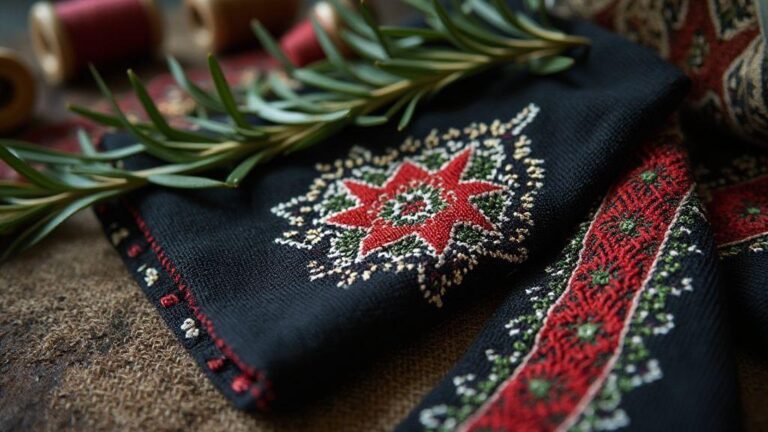
Color palette Kalocsa and materials
Kalocsa embroidery shines when you use the right colors and textures. You’ll feel the energy of the region in every stitch, from the glossy threads to the soft base fabrics. Your palette should start with bold red tones, bright greens, and sunny yellows, then ground them with deep blues and earthy browns. You’ll notice how the colors interact: the red pops against a dark navy, while the greens sing next to warm yellows. Keep your choices vivid but balanced, so the design remains readable from a distance and in close-up detail. The fabrics you pick matter too; a smooth cotton or linen gives crisp outlines, while a slightly textured base adds depth. When you sew, you’ll see the contrast edges sharpen and the floral shapes become more lifelike. Your aim is a lively, harmonious look that still reads cleanly from afar.
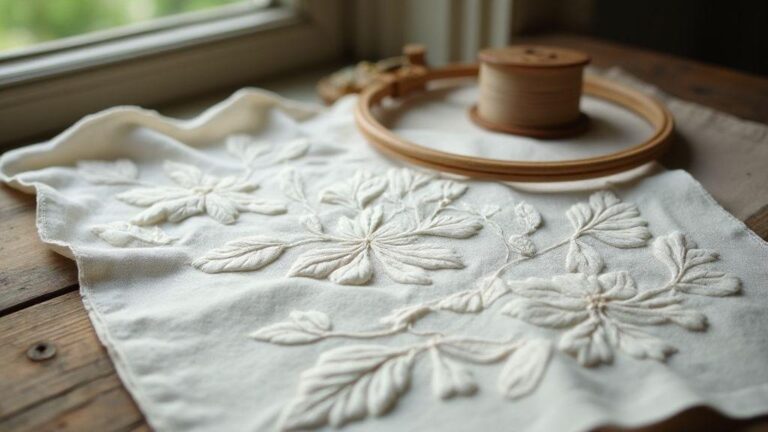
Kalocsa pieces often start with a bright, clean base. Think of a white or ivory fabric as your canvas, then you add the color punch. You’ll want colors that stay true after washing, so choose well-sealed threads and stable fabrics. If your project is a wall hanging, a sturdy linen base can handle long, dense stitching without puckering. For table linens or clothing, lightweight cottons are friendlier to the hand and stay comfortable after long wear. The material choice guides how you stitch too: silk threads give a glow for special pieces, while cotton threads are reliable for everyday pieces. Your goal is durability without losing the radiant Kalocsa look. You’ll know you nailed it when the colors stay bright and the fabric holds up through multiple uses and washes.
As you plan, keep accessibility in mind. Bold florals need strong outlines, so pair bright tops with darker outlines to help the design pop. If you’re re-creating a traditional motif, study how Kalocsa designers separated areas of color to avoid bleeding. A simple rule: place light colors next to dark ones and avoid too many tiny areas in one color. This keeps the embroidery readable in natural light or indoor lighting. Your final piece should feel cheerful and timeless, like a window into Kalocsa’s street markets and churches, inviting a second look each time.
Traditional threads and fabrics
You’ll work with threads that have a firm hand and a bright finish. Traditional Kalocsa embroidery often uses sturdy cotton threads that hold shape well, with a glossy sheen that catches the eye on the wall or garment. You’ll notice that length and twist matter: longer, tightly twisted threads resist fraying and keep your colors even across the whole pattern. When you pull the thread through fabric, you want a smooth path that doesn’t snag or stretch the base, so choose a quality needle and a steady hand. Your stitches will look crisp and uniform, which helps the big floral motifs stand out against the background. The fabrics themselves are chosen for their ability to support bold shapes without wrinkling or bunching. Cotton or linen offer a balance of firmness and flexibility that keeps your designs clean over time.
If you’re matching a traditional Kalocsa design, use fabrics with a tight weave. They’re easier to control and let your color blocks read clearly. You’ll also appreciate fabrics that aren’t too slippery; a slight tooth in the weave helps your stitches stay put. For several pieces, you might favor a medium-weight linen because it holds edges well and wears beautifully. If you’re making a modern piece inspired by Kalocsa, you can experiment with blends, but you’ll still want a stable base that won’t distort when you wash it. When you finish, you’ll see how the threads sit neatly on top of the fabric, creating crisp outlines that mimic the traditional look while staying fresh.
Your color choices matter here, too. Use contrasting threads to define shapes, and reserve a few high-contrast colors to emphasize the main flowers. The rest of your palette can flow in as secondary details, giving your piece a layered, rich appearance. You’ll feel satisfied when the embroidery breathes with the fabric rather than fighting it. The result should be bold, clean, and unmistakably Kalocsa in spirit.
Natural dyes and color choices
Natural dyes give Kalocsa embroidery its warm, authentic glow. You’ll use plant-based or mineral sources to achieve bright reds, greens, and yellows that age gracefully. When you choose your colors, think about how they will look after years of light exposure. Reds from madder or cochineal can stay vivid, while greens from nettle or weld mix with blues for depth. Yellows from saffron or weld brighten the scene without looking harsh. The dyeing process matters as much as the thread: you’ll want even color throughout and minimal variation between skeins. If you’re dyeing your own threads, test a small sample first and compare to a finished piece so you keep control over the final look. Natural dyes often shift a bit with time, so plan your palette to accommodate gentle aging rather than fighting it.
Color choices should respect tradition but still fit your project. Kalocsa motifs thrive on contrast: a bright red or orange against a cool blue, with greens providing a natural balance. You’ll find that some tones mellow with time, especially warmer yellows and oranges. To preserve brightness, keep dyed threads away from excessive sunlight and store them in a cool, dark place. If you’re re-creating a historical piece, aim for authentic hues but don’t fear slight modern equivalents if they keep the same feel. The key is to maintain the cheerful, countryside vibe that defines Hungarian Kalocsa embroidery: bold florals that feel alive.
When you work with natural dyes, you’ll notice their personality. Some colors may bleed a little at first wash—plan your design with simple, clean edges that won’t blur. You’ll also want to document dye lots so you can match colors in future projects. Your pieces will age with character, showing subtle shifts that tell your fabric’s story. The end result should be a lively tapestry of color that echoes traditional Kalocsa while still feeling personal to you.
Dye sources
You’ll source dyes from local plants, insects, and minerals to keep the Kalocsa look authentic. Madder and cochineal are classic red options; weld and indigo can give you bright greens and deep blues. You’ll often find saffron or turmeric for warm yellow tones, but keep in mind that some yellows can fade. Start with a small batch to test color strength and washing stability before committing to a large project. Keep your dye sources organized so you can replicate colors later if needed. Your goal is consistency across skeins, so label each batch clearly and note the fabric type, mordant, and dye time. The more careful you are at the start, the easier it is to keep your colors even from needle to needle.
If you prefer modern convenience, you can use commercially pre-dyed threads that mimic natural hues. Look for shades labeled as Madder Red, Weld Green, or Indigo Blue to stay faithful to Kalocsa’s palette. Even with ready-made options, you’ll still benefit from testing on scrap fabric before you commit to a full piece. You’ll notice that the traditional feel comes through when the colors have slight, natural variation—just enough to remind you of hand-dyed origins without sacrificing uniformity where you need it.
You’ll love the process when you see the colors come together on your fabric. The palette you build from these dye sources should feel bright, friendly, and true to Kalocsa’s spirit. Your finished embroidery will carry that historical glow with a modern touch, proving that bold florals can stay relevant across generations.
Techniques of traditional Hungarian needlework
Traditional Hungarian needlework lets you see history in every stitch. You’ll notice how each region has its own voice, with colors and patterns that tell a tale. When you dive into Kalocsa embroidery, you’re stepping into a world where nature speaks through thread and fabric. You’ll feel the same thrill I do when I uncover a new design in an old village: a small treasure that fits right into your own projects. Let’s explore how this art stays alive in today’s stitches and why it matters to you.
You’ll find that the heart of Hungarian needlework is patient, precise work. You’ll pick up habits from generations before you: counting stitches, keeping your thread taut, and choosing the right needle for each fabric. The result is fabric that feels sturdy and vibrant, not flat or fussy. As you practice, you’ll notice your hands moving with a calm rhythm, almost like a melody. That rhythm helps you transfer ideas into real textile pieces that look both traditional and fresh.
Kalocsa’s style carries bold energy, yet it remains inviting. You’ll enjoy the way bold florals and clean lines balance each other. The more you work with the stitches, the clearer the regional identity becomes in your finished pieces. You’re not just sewing; you’re keeping a living tradition in your own home, and that feels powerful.
Stitches used in Kalocsa embroidery
When you start with Kalocsa embroidery, you’ll begin with simple, sturdy stitches that create a strong foundation. You’ll use running stitches to outline shapes, then fill areas with satin stitches for smooth color blocks. The satin stitch is your best friend here: it gives you solid color without gaps. You’ll notice how the thread sits neatly on the fabric, showing care in every row. The back of your work stays clean if you pull threads tight but not too tight, so your piece wears well.
You’ll also meet backstitch and straight stitch as you grow. The backstitch helps you define outlines clearly, which is essential for the bold floral patterns Kalocsa is known for. The straight stitch fills narrow spaces and fine details without making the fabric pucker. You’ll see how combining these stitches creates the crisp, graphic look you expect from Kalocsa embroidery.
Color plays a crucial role, too. You’ll often choose bright reds, deep greens, and sunny yellows to mimic the bold Kalocsa palette. You’ll switch to lighter shades for highlights, letting your flowers breathe on the fabric. The texture you get from layering stitches brings depth, as if the petals could open up right on your garment or tablecloth.
Patterns and transfer methods
Kalocsa patterns are famous for their large florals and lively borders. You’ll notice that motifs repeat in a way that feels both natural and planned. You’ll want to study the shapes, then sketch rough layouts on tracing paper. When you’re ready, you’ll transfer the design onto fabric using chalk or a water-soluble pen. The transfer helps you keep the proportions correct as you stitch.
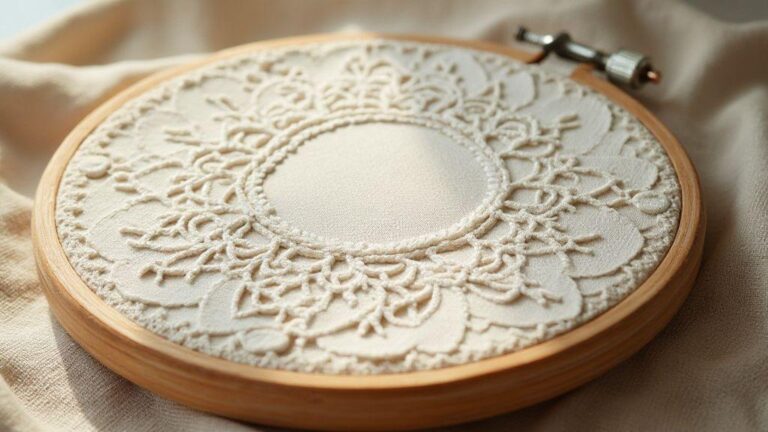
To keep edges clean, you’ll use a light touch when transferring. You’ll also pin your fabric to a hoop or frame so the cloth stays flat. The frame minimizes distortion as you work, which matters a lot in bold, symmetrical Kalocsa designs. If a line doesn’t sit right after you start stitching, you’ll adjust early. A small change now saves you from bigger headaches later on.
Patterns in Kalocsa often rely on symmetry and balance. You’ll plan the center flower first, then place side motifs in even spacing. This approach keeps your piece cohesive, whether you’re embroidery on a pocket, a blouse, or a decorative panel. The result feels deliberate, not random, which is exactly what gives Kalocsa its unmistakable identity.
Stitch basics
You’ll keep your stitches neat by maintaining consistent tension. Tighten a little as you go, then relax when you reach a stretch of space. This keeps your fabric flat and your colors even. Always test a tiny stitch on scrap fabric first to confirm you’ve got the right tension. Your aim is a clean line, not a puckered edge.
Remember to secure your ends properly. You’ll tie a small knot before you start and bury the tail at the back as you finish. This prevents loose threads from popping out later. With practice, you’ll feel your hands know exactly where to land your needle for a crisp Kalocsa finish.
Kalocsa on Hungarian regional costume embroidery
You’ve probably seen Kalocsa embroidery and felt a spark of color and life. Hungarian Kalocsa Embroidery: Bold Florals and Regional Identity isn’t just pretty patterns; it’s a story you wear. In Kalocsa, the stitches tell of fields bursting with flowers, and you’ll notice the way the red, blue, and green threads turn simple fabric into a landscape you can carry. You’ll feel the energy in the symmetry and the way each bloom mirrors the season. When you look closely, you’ll see the bold florals aren’t random; they’re a bold statement that connects you to a whole region and its traditions. This isn’t just decoration—it’s a declaration you belong to a culture that honors craft, memory, and color.
Kalocsa embroidery sits at the heart of regional dress, and you’ll notice it on everyday clothes as well as festive outfits. The style uses bright floral clusters that curve along the seams, creating movement as you walk. If you’re trying to recognize Kalocsa in a blouse or apron, look for large, stylized flowers with crisp outlines and contrasting centers. The stitching often follows the fabric’s lines, so the pattern flatters your shape rather than fighting it. When you wear it, you’ll feel how the flowers frame you, almost like you’re stepping into a living painting that travels with you.
You don’t have to be from Kalocsa to appreciate how these motifs work. The embroidery invites you to notice the craft—how thread and needle become a map of a landscape you can carry. The bold florals are not just pretty; they’re a signal you value heritage, skill, and a sense of playfulness that makes outfits feel alive. If you’re shopping, you’ll want to choose pieces that keep the flowers bright and the stitches tight, so the whole story lasts as long as your memories do.
Placement on blouses and aprons
You’ll see Kalocsa’s bold florals placed along the collars, cuffs, and hems of blouses, plus the apron panels that frame your waist. The flowers often drift along the shoulder line, then cascade down the sleeve or front seam, guiding the eye toward your hands as you move. This placement isn’t random; it’s designed to highlight your posture and the way you carry yourself, making every gesture feel intentional. When you wear a Kalocsa blouse, you’ll notice how the florals create a sense of motion, like the pattern is dancing with you.
On aprons, the embroidery sits where you’ll see it most—across the front panels and sometimes along the waist tie. This makes your apron feel like a portable gallery you can carry into a room full of guests. If you’re layering, you can pair a Kalocsa blouse with a simpler skirt, letting the bold flowers do the talking. The key is balance: let the embroidery be the star, not the dress’s fabric fighting for attention. By choosing pieces with clean backgrounds and vivid threads, you keep the design readable and striking.
When you plan an outfit, think about how the placement will look from afar and up close. From a distance, the bouquet-like shapes read as strong color blocks; up close, you’ll notice the careful stitch work that holds each petal in place. You get a sense of pride in your clothes when the embroidery sits right—well-placed blooms that don’t overwhelm the fabric but lift it. Your Kalocsa embroidery becomes a personal signature you wear with confidence.
Role at festivals and weddings
At festivals, Kalocsa embroidery marks you as part of a living tradition. You’ll see couples and families proudly displaying their regional styles, and you’ll feel the camaraderie in the air. The bold florals signal celebration, not ceremony alone; they say, We honor our roots and love to share them. You’ll notice guests complimenting the outfits, recognizing the skill and time poured into every stitch. Wearing Kalocsa embroidery at these events makes you feel connected to generations of makers.
At weddings, the embroidery carries extra weight. The motifs echo abundance, joy, and continuity—for you, that means dressing in something with heritage that still feels fresh. A Kalocsa blouse or apron can be the heirloom someone passes along, or a statement you keep for a special day. The floral panels frame your face and hands, catching light as you move, so you appear vibrant in photos and in person. You’ll notice how family and friends smile with pride when you step into the room wearing these timeless patterns.
If you’re deciding how to integrate Kalocsa embroidery into a celebration, start with one piece you love—the blouse or the apron—then build with complementary accessories. Choose fabrics in solid colors that let the florals pop, and avoid busy prints that compete with the embroidery. You’ll find that this approach keeps the look cohesive, elegant, and unmistakably Kalocsa.
Costume care
To keep your Kalocsa embroidery bright and strong, you’ll want to treat it gently. Hand-wash the garments in cool water with a mild detergent, then lay them flat to dry away from direct sun. If you must machine-wash, use a gentle cycle and place the item in a mesh bag to protect the stitches. Iron on a low heat setting with a press cloth to prevent scorching the threads. Store the piece in a cool, dry place, folded carefully so the embroidery isn’t crushed. Regularly check for loose threads and trim them carefully to avoid further unraveling. With a bit of TLC, your Kalocsa embroidery remains bold and beautiful for years, your own living testament to Hungarian craft.
Regional textile identity and cultural heritage embroidery
Your regional textile identity is a living story you wear. When you look at traditional stitches, you’re seeing centuries of daily life, love, and work stitched into fabric. Each region writes its own language with thread: bold colors signal celebrations, simple stitches mark workwear, and tiny details show family stories passed down through generations. You’ll notice how motifs—flowers, animals, or geometric patterns—link you to a place: a heraldic symbol from a village, a river’s bend, or a mountain’s silhouette. This isn’t decorative only; it’s your cultural memory in wearable form, reminding you that your craft carries meaning beyond aesthetics. The more you study regional styles, the clearer your own identity becomes, clarified by textures you can touch and share.
You’ll also feel the community side of embroidery. Markets, fairs, and communal projects pull neighbors together, and that social fabric matters as much as the threads you stitch. When you collect examples from nearby towns or family trunks, you’ll notice how tools and materials travel with people—linen from a neighbor, dyes from a local shop, a needle passed down from an elder. This connection to place makes your work richer and more resilient, especially when new materials arrive. It’s about honoring a place while you add your voice to its fabric story.
As you explore, you’ll recognize the role of preservation as a living practice. You don’t just copy old patterns; you adapt, keep the technique alive, and teach others how to do it. Your region’s embroidery becomes a bridge between past and present, a way to keep traditions useful and relevant. The result is a personal craft that respects history while inviting you to contribute something new.
Museums and preservation projects
Museums show you the best of what regional embroidery can be. They place delicate pieces in safe cases, but they also tell stories that you can’t ignore. You’ll see how techniques evolve, how color palettes shift with available dyes, and how social change changes what people stitched. These collections aren’t dusty relics; they’re clues to how your own work might grow. When you study a piece on display, you notice the tiny marks of repair, the wear patterns, and the invisible hands that kept it intact. This gives you practical ideas for keeping your own textiles lasting longer.
Preservation projects invite you to participate. You can volunteer to catalog motifs, help with textile conservation, or support community archives. Your involvement matters because it keeps practices alive for your kids and their kids. You’ll learn about ethical sourcing, proper storage, and how to handle fragile fabrics with respect. By engaging, you turn appreciation into action, and your own practice gains a stronger foundation.
You’ll also find that museums connect you to distant threads of shared humanity. A Hungarian Kalocsa Embroidery piece, for example, can reveal bold florals and regional identity that echo across borders. Seeing it in a museum makes you curious about other places’ embroidery, expanding your own taste and technique. This global view helps you borrow ideas while staying true to your regional roots.
Contemporary fashion and craft revival
Today’s fashion world loves the soul of traditional embroidery. You can wear your heritage with pride, choosing garments that feature bold florals or delicate stitches in modern cuts. The trick is balance: pair a classic Kalocsa-inspired motif with a contemporary silhouette, or mix regionally inspired motifs into up-to-date embroidery panels. You’ll notice designers embracing handwork as a statement of care and craft, not just ornament. Your own projects can ride this wave by adding thoughtful, high-quality embroidery to a jacket, bag, or pillow.
Craft revival is more than fashion; it’s a community push. You’ll join workshops, online groups, and local studios where you can learn new techniques, share patterns, and trade fabric scraps. The exchange keeps skills alive and makes you part of a bigger circle that cares about heritage. When you test a new thread or stitch on a modern garment, you’re proving that traditional methods still have a live, loud voice in today’s world.
You’ll also see how sustainability feeds revival. Hand embroidery uses fewer resources than mass production, and repairable textiles extend your wardrobe’s life. You become part of a trend that values slow, careful work—stitch by stitch, you slow down and pay attention to detail. Your own projects can be tiny experiments or bold statements, and both help keep the craft vibrant and relevant.
Where to learn
If you want to dive in, look for local workshops, community centers, or cultural associations that offer hands-on sessions in regional embroidery. Seek classes that emphasize technique first, then let you explore motifs from your area. You’ll pick up the rhythm of the stitch, the weight of the thread, and the feel of a fabric you’ve never used before. Practice with simple projects at first, then gradually tackle more complex patterns as your confidence grows.
Hungarian Kalocsa Embroidery: Bold Florals and Regional Identity
Hungarian Kalocsa Embroidery: Bold Florals and Regional Identity isn’t just about pretty patterns; it’s a story you wear. In Kalocsa, the stitches tell of fields bursting with flowers, and you’ll notice the way the red, blue, and green threads turn simple fabric into a landscape you can carry. You’ll feel the energy in the symmetry and the way each bloom mirrors the season. When you look closely, you’ll see the bold florals aren’t random; they’re a bold statement that connects you to a whole region and its traditions. This isn’t just decoration—it’s a declaration you belong to a culture that honors craft, memory, and color.
Kalocsa embroidery sits at the heart of regional dress, and you’ll notice it on everyday clothes as well as festive outfits. The style uses bright floral clusters that curve along the seams, creating movement as you walk. If you’re trying to recognize Kalocsa in a blouse or apron, look for large, stylized flowers with crisp outlines and contrasting centers. The stitching often follows the fabric’s lines, so the pattern flatters your shape rather than fighting it. When you wear it, you’ll feel how the flowers frame you, almost like you’re stepping into a living painting that travels with you.
You don’t have to be from Kalocsa to appreciate how these motifs work. The embroidery invites you to notice the craft—how thread and needle become a map of a landscape you can carry. The bold florals are not just pretty; they’re a signal you value heritage, skill, and a sense of playfulness that makes outfits feel alive. If you’re shopping, you’ll want to choose pieces that keep the flowers bright and the stitches tight, so the whole story lasts as long as your memories do.
Placement on blouses and aprons
You’ll see Kalocsa’s bold florals placed along the collars, cuffs, and hems of blouses, plus the apron panels that frame your waist. The flowers often drift along the shoulder line, then cascade down the sleeve or front seam, guiding the eye toward your hands as you move. This placement isn’t random; it’s designed to highlight your posture and the way you carry yourself, making every gesture feel intentional. When you wear a Kalocsa blouse, you’ll notice how the florals create a sense of motion, like the pattern is dancing with you.
On aprons, the embroidery sits where you’ll see it most—across the front panels and sometimes along the waist tie. This makes your apron feel like a portable gallery you can carry into a room full of guests. If you’re layering, you can pair a Kalocsa blouse with a simpler skirt, letting the bold flowers do the talking. The key is balance: let the embroidery be the star, not the dress’s fabric fighting for attention. By choosing pieces with clean backgrounds and vivid threads, you keep the design readable and striking.
When you plan an outfit, think about how the placement will look from afar and up close. From a distance, the bouquet-like shapes read as strong color blocks; up close, you’ll notice the careful stitch work that holds each petal in place. You get a sense of pride in your clothes when the embroidery sits right—well-placed blooms that don’t overwhelm the fabric but lift it. Your Kalocsa embroidery becomes a personal signature you wear with confidence.
Role at festivals and weddings
At festivals, Kalocsa embroidery marks you as part of a living tradition. You’ll see couples and families proudly displaying their regional styles, and you’ll feel the camaraderie in the air. The bold florals signal celebration, not ceremony alone; they say, We honor our roots and love to share them. You’ll notice guests complimenting the outfits, recognizing the skill and time poured into every stitch. Wearing Kalocsa embroidery at these events makes you feel connected to generations of makers.
At weddings, the embroidery carries extra weight. The motifs echo abundance, joy, and continuity—for you, that means dressing in something with heritage that still feels fresh. A Kalocsa blouse or apron can be the heirloom someone passes along, or a statement you keep for a special day. The floral panels frame your face and hands, catching light as you move, so you appear vibrant in photos and in person. You’ll notice how family and friends smile with pride when you step into the room wearing these timeless patterns.
If you’re deciding how to integrate Kalocsa embroidery into a celebration, start with one piece you love—the blouse or the apron—then build with complementary accessories. Choose fabrics in solid colors that let the florals pop, and avoid busy prints that compete with the embroidery. You’ll find that this approach keeps the look cohesive, elegant, and unmistakably Kalocsa.
Costume care
To keep your Kalocsa embroidery bright and strong, you’ll want to treat it gently. Hand-wash the garments in cool water with a mild detergent, then lay them flat to dry away from direct sun. If you must machine-wash, use a gentle cycle and place the item in a mesh bag to protect the stitches. Iron on a low heat setting with a press cloth to prevent scorching the threads. Store the piece in a cool, dry place, folded carefully so the embroidery isn’t crushed. Regularly check for loose threads and trim them carefully to avoid further unraveling. With a bit of TLC, your Kalocsa embroidery remains bold and beautiful for years, your own living testament to Hungarian craft.
Where to learn
If you want to dive in, look for local workshops, community centers, or cultural associations that offer hands-on sessions in regional embroidery. Seek classes that emphasize technique first, then let you explore motifs from your area. You’ll pick up the rhythm of the stitch, the weight of the thread, and the feel of a fabric you’ve never used before. Practice with simple projects at first, then gradually tackle more complex patterns as your confidence grows.
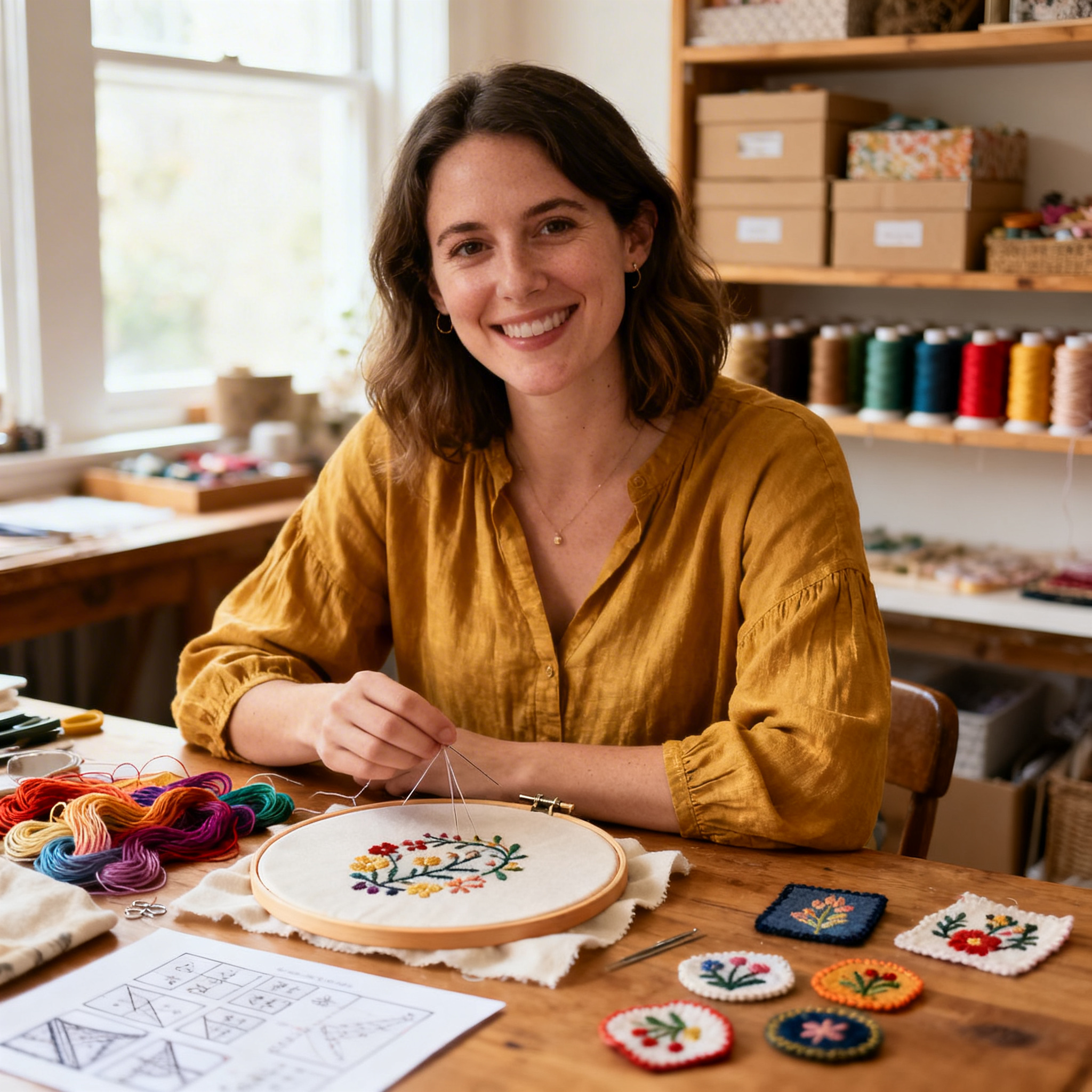
I’m Sophie Caldwell, the author behind granaboom.com, and I believe hand embroidery is one of the simplest, most relaxing ways to create something beautiful with your own hands. I started this blog to help beginners learn hand embroidery without feeling overwhelmed by complicated instructions or “perfect” results.
Here you’ll find beginner-friendly guides to decorative embroidery stitches, along with clear step-by-step practice ideas and patterns you can use to build confidence. My focus is on making the learning process easy: simple explanations, helpful stitch combinations, and small projects that look polished even when you’re just starting out.
Welcome to granaboom.com—grab your hoop, choose a few colors, and let’s stitch one line at a time.