Free Botanical Line Art Patterns Perfect for Hoop Art
Where you can download free botanical line art patterns
You’re after free botanical line art patterns that look great on hoop projects, and you’ll find plenty if you know where to look. Start with sites that publish ready-to-use designs, not just pretty pictures. Look for clean, simple lines that print well at small sizes and on fabric. When you land on a pattern, check the license—you want something you can use for personal projects without chasing permission for every hoop you stitch. The best spots give you a quick preview, a clear download button, and the file types you need. Keep an eye on the file size and the balance of line thickness; thinner lines are pretty, but thicker lines are easier to stitch on fabric. These Free Botanical Line Art Patterns Perfect for Hoop Art give you scalable, printer-friendly options and clear licensing to suit personal projects.
If you want a steady stream of options, bookmark a few trusted sources and check back weekly. Many creators bundle seasonal sets, so you can build a library that grows with your hoop projects. It helps to download multiple patterns at once while you’re there, so you’re ready the moment you want to start. For your projects, try to pick designs that share a consistent line weight and simple shapes; this makes your embroidery look cohesive across different hoops. Finally, respect the creators’ terms; the note on how you can use the pattern matters, especially if you plan to sell finished pieces. This approach applies to Free Botanical Line Art Patterns Perfect for Hoop Art, so you know exactly how you can use each pattern.
Remember, you’re not just collecting pretty images—you’re gathering tools for real, hands-on art. Your hoop work will thank you for patterns that stitch cleanly and look polished on fabric. When you find a site with a good mix of nature motifs and modern silhouettes, save it in your favorites. Your future projects will move faster, and your hoops will look more professional.
Trusted craft sites for botanical hoop art patterns free
When you start with trusted craft sites, you’re not guessing about quality. These platforms typically offer downloadable SVG, PNG, or PDF files that are ready for printing or cutting. Look for sites with clear licensing, a visible download queue, and user reviews that mention print and stitch results. A reliable site often showcases patterns that are specifically designed for hoop art, so the lines aren’t overly delicate and will hold up under embroidery. You’ll notice that the best hubs organize patterns by theme—florals, leaves, and botanical outlines—so you can quickly find a match for your project mood. These hubs are ideal for Free Botanical Line Art Patterns Perfect for Hoop Art, ensuring you get consistent results.
On solid craft sites, you’ll also get tutorials or a tips section. These extras help you adjust size, choose fabric, and pick the right stabilizer. They might even offer a quick stitching guide for beginner-to-intermediate hoop projects. If you’re new, start with patterns labeled as beginner-friendly; these often come with a sizing chart and a suggested thread count. A trusted site will also let you filter by file type, which saves you time when you’re preparing your hoop kit. In short, go with sites that treat you like you want to be treated—as a maker who values clarity, quality, and copyright respect. This level of reliability matters when seeking Free Botanical Line Art Patterns Perfect for Hoop Art.
File types to look for: SVG, PNG, PDF for printable botanical line art for hoop embroidery
For hoop embroidery, your top three file types cover most needs. SVG files are scalable vector graphics that you can resize without losing sharpness; they’re great if you plan to cut with a machine or print at different sizes. PNGs give you clean, transparent-background images that are perfect for tracing or quick printing on fabric stabilizers. PDFs are reliable for printable patterns that keep exact proportions, especially if you want to run a batch of prints for several hoops. When you combine these types, you’ll have both flexibility and accuracy for your projects. These formats support Free Botanical Line Art Patterns Perfect for Hoop Art, making it easy to adapt patterns to your hoop sizes.
Choose patterns that include clean, continuous lines, not broken segments, unless the design intentionally uses breaks. A good set will come with multiple size options or a note on how to resize while preserving line integrity. If you stitch by hand, a PNG with a solid layout you can trace over is handy. If you’re laser cutting or using a cutting machine, an SVG will be your best friend. PDFs are ideal when you want a crisp print guide for tracing directly onto your fabric. Keep a small library of all three so you can swap tools as your project demands. This helps when you’re collecting Free Botanical Line Art Patterns Perfect for Hoop Art from different sources.
Quick download tips for printable botanical line art for hoop embroidery
To save time, open your chosen pattern and check the preview at a glance. Look for bold lines that will stitch cleanly on cotton or linen, and pick patterns that suit your hoop size. Before you download, confirm the file type you need for your setup—SVG for cutting or resizing, PNG for quick prints, and PDF for a precise print guide. When you download, grab any accompanying notes that explain sizing or recommended stabilizer and thread count. If you’re unsure about licensing, choose patterns labeled for personal use only or those with a clear, permissive license. Finally, organize downloads by project or theme so you can pull the right pattern the next time you shop your fabric stash. This strategy keeps your Free Botanical Line Art Patterns Perfect for Hoop Art ready for action.
How you can transfer free line art botanical templates to fabric
I know you want a clean, easy path from digital templates to beautiful hoop art fabric. You’ll start by choosing templates with simple lines and clear contrast—perfect for transfer. When you print or trace, you’ll see how the lines sit on your fabric and how much tension you’ll need on your hoop. Your goal is a crisp imprint that won’t smear, blur, or fade as you stitch. Practice on a scrap piece first, then move to your final fabric so your hoop art comes out exactly as you pictured. This approach works well with Free Botanical Line Art Patterns Perfect for Hoop Art and helps ensure consistent results.
Your approach should be hands-on and predictable. Pick a method that fits your fabric type and the hoop size you use most. If your fabric is light and woven, you’ll want a transfer that stays put through several passes of stitching. If your fabric is dark, you’ll need a method that shows up clearly against the thread color you plan to use. By thinking about these details before you start, you avoid surprises and keep your project moving. The key is to keep your lines precise and your fabric flat in the hoop, so every outline stays where it belongs.
Now, let’s map out practical steps you can take today. Organize your templates, gather your transfer tools, and test on a practice swatch. Mark your fabric edges and hoop sizes so you don’t misplace a line during transfer. Finally, remember to keep your workspace steady and calm; tension in your hoop translates to tension in your stitching, and you want both to stay even. You’re building a workflow that makes Free Botanical Line Art Patterns Perfect for Hoop Art feel easy to recreate.
Simple printing and resizing for hoop frames
Your first move is to print the templates at the size you actually need. Use a home printer with good color or line accuracy, and print on regular paper to test the fit before moving to fabric. If you need a smaller or larger version, resize in small increments so lines stay clean and don’t blur. Keep the printout flat and aligned with your hoop to check whether the design sits where you want it on your fabric.
When you’re ready to move to fabric, use a light touch and accurate alignment. For light fabrics, print or trace directly onto transfer paper, then press or rub the image onto the fabric with steady pressure. For dark fabrics, you can shift to tracing or using a contrasting marker to help you see the line work clearly before you permanently transfer it. The more you practice matching the print to the fabric, the more confident you’ll be at keeping your lines crisp when you stitch.
Finally, test the transfer with a quick stitch on scrap fabric. If the line holds under a few stitches, you’re good to proceed. If it bleeds or smears, adjust your method or try a different transfer option. Your goal is reliability: a transfer that remains sharp under heat, pressure, and your needle. This approach keeps Free Botanical Line Art Patterns Perfect for Hoop Art in clear view as you work.
Transfer options: tracing, iron-on, soluble stabilizer for free line art botanical templates for hoop art
Tracing is the simplest and most versatile option. You’ll place your template under a light source, tape everything in place, and trace the lines with a fine pencil or erasable marker. This method works well for beginners and for designs with clean, thin lines. It’s quick, flexible, and you can adjust lines as you go—great for freehand adjustments that sometimes happen when you’re excited about a design.
Iron-on transfer is stronger and less likely to shift. You’ll print or trace your design on special transfer paper, then iron it onto your fabric following the paper’s instructions. This is ideal for hoop art where you want a stable guide that won’t move as you stitch. It’s especially helpful if you’re working with busy or dark fabrics where light pencil lines wouldn’t stand out.
Soluble stabilizer is a modern favorite for free line art. You place the stabilizer behind the fabric, print or trace your lines onto it, and the stabilizer dissolves away in water after stitching. This gives you a near-perfect, bleed-free line on your fabric and is fantastic for intricate designs. It does require a wash-out step, but the result is a clean, professional look that’s hard to beat. This method is particularly effective for Free Botanical Line Art Patterns Perfect for Hoop Art when you want ultra-clean lines.
Best transfer method for hand drawn botanical line art for hoops free
Your best bet is soluble stabilizer for hand-drawn botanical line art. It preserves fine details without ghosting and washes away after you’re done, leaving minimal residue. This method lets you keep a light, precise line that’s easy to stitch over. If you’re new to stabilizers, practice with a simple design first to get the feel for how much water you need and how long to rinse. You’ll appreciate the crisp edges and the freedom to draw with confidence.
How you can pick minimalist botanical line art designs free
You want designs that look clean and calm on your hoop art, and you don’t want to search forever. Start by listing simple plant types you love—sprigs, single leaves, or tiny seed pods. Look for clear lines and minimal detail; the goal is to hint at a plant, not repeat every vein. When you choose, pick designs that feel balanced in weight: line thickness should stay consistent, with a gentle contrast between bold stems and fine accents. Try to grab a few options that show the same idea from different angles—you’ll see which one reads best in a hoop and which feels off. If you can, download a small collection labeled as free so you can try them side by side without any cost commitment. Free Botanical Line Art Patterns Perfect for Hoop Art can be found in many curated packs.
Next, check how the designs handle space. Minimalist line art shines when there’s breathing room. Favor compositions where the main line doesn’t crowd the hoop edge. You’ll often find great free options using a lot of negative space around a single stem or a simple cluster. Make sure the line art looks good both in black on white and with a soft background shade, since hoop art often sits in a cozy corner with varying lighting. When in doubt, pick designs with clean starting and ending points so you can easily trace or scan them to your loom or software. This approach helps you curate a set of Free Botanical Line Art Patterns Perfect for Hoop Art that reads consistently across frames.
Finally, consider the source and license. You want to avoid licenses that require attribution or limit commercial use. Look for clean, free-for-personal-use terms and a clear download format like PNG or vector SVG. If a design is described as free, verify there’s no hidden fee for using it in hoop art projects. Always keep a small set of your favorites ready so you can swap in a new piece whenever your mood shifts. Free Botanical Line Art Patterns Perfect for Hoop Art should always come with clear terms.
Choosing simple shapes and negative space for minimalist botanical line art designs free
You’ll get the best impact when you pick designs built from basic shapes: circles for buds, lines for stems, and arcs for leaves. These shapes are easy to reproduce and scale, which is perfect when you’re pulling patterns into different hoop sizes. Look for designs where negative space forms the plant’s silhouette—so your hoop isn’t overwhelmed and the subject remains recognizable even at a small scale. If a design relies on tiny internal details, it will look busy in a hoop; pass on it in favor of bold, open shapes.
When you test a design, print it at the size you’ll use and hold it up to your hoop. Do you still see the main idea from a few steps away? If yes, you’ve likely found a good minimalist piece. If the negative space creates awkward gaps or the lines feel crowded, keep looking. Your goal is a clear, elegant outline you can easily trace with thread or a thin marker. A design that uses only a few strokes can feel surprisingly sophisticated when placed correctly in the hoop. This approach helps you curate Free Botanical Line Art Patterns Perfect for Hoop Art that stay elegant at any size.
Scaling designs to fit different hoop sizes
You want your design to work whether your hoop is small or large, so pick patterns that scale cleanly. Choose line art with a central motif and open space around it; this makes it easier to modify without losing the composition. If you’re not sure, test at three sizes: the size you’ll use, a half-size, and a double-size. If the design holds up and still reads as botanical, you’re good to go. Remember, line thickness matters—thin lines can vanish in a large hoop, while thick lines can look heavy in a small one. Aim for a balance that stays legible across sizes.
When you’re ready to scale, keep the relative proportions steady. Don’t distort stems or leaves; just move them closer or farther to fit the hoop edge. If you’re using digital templates, lock the aspect ratio so every part scales evenly. If you print and trace, ensure the tracing paper captures those proportional shifts. The right scaling keeps your minimalist vibe intact, no matter the hoop you choose.
Top tips for simple botanical line art patterns for hoop framing free
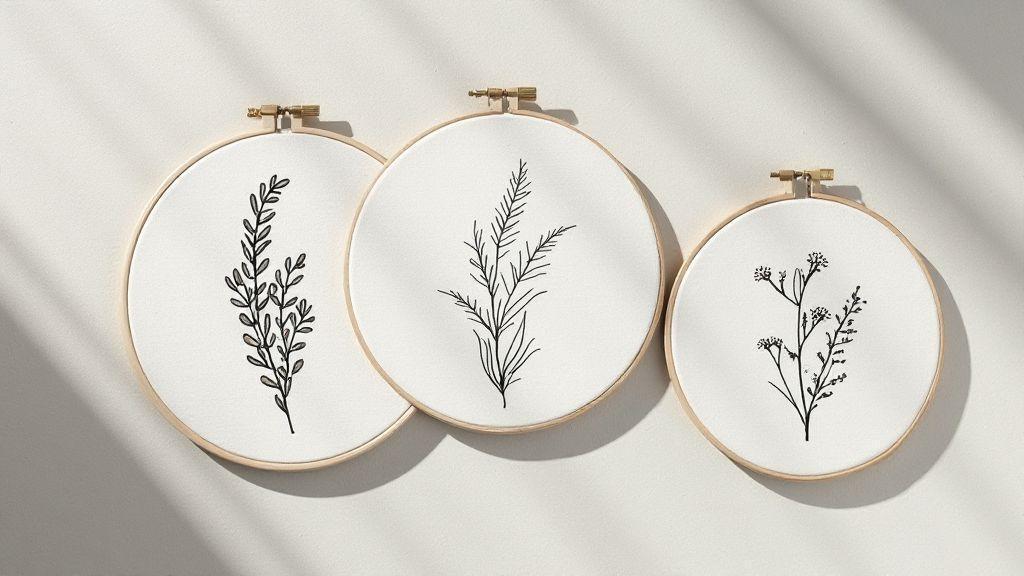
Start with one clean motif and build around it—less is more here. Use a single thread path or a couple of interwoven lines to keep the look crisp. If you’re unsure, pick patterns that feature a single stem with a few leaves; it’s the safest route to a balanced composition. Leave generous margins so the design breathes inside the hoop, and test both upright and rotated versions to see which reads strongest. Finally, choose patterns labeled as free and for personal use to avoid licensing headaches later. Free Botanical Line Art Patterns Perfect for Hoop Art are out there; you just need the right eye to spot them.
What materials you need for Free Botanical Line Art Patterns Perfect for Hoop Art projects
You’ll feel confident starting when you know exactly what to gather. The right tools let you focus on the design, not hunting for supplies. Your goal is clean lines, steady stitches, and a finished piece you’re proud to hang or gift. Think about choosing a few reliable basics first, then you can add little extras as you grow more confident with each project. This approach keeps your process simple and enjoyable from the first outline to the final hoop. This applies to Free Botanical Line Art Patterns Perfect for Hoop Art as you assemble your kit.
When you pick materials, consider how you’ll handle the hoop size and fabric type. A sturdier fabric makes lines crisp, while a smaller hoop keeps details tight. You’ll also want a color plan in mind—stick to a limited palette for a clean look, or add a pop of color for a modern twist. Remember: even with free pattern ideas, the right materials help you translate those lines into beautiful, finished hoop art that lasts. This is especially true for Free Botanical Line Art Patterns Perfect for Hoop Art projects.
Finally, plan for a cozy workspace. A flat, well-lit table, your favorite chair, and a few calm minutes to concentrate make a big difference. Your setup should feel inviting but not cluttered, so you can focus on the flow of stitching and the rhythm of the lines. With the proper tools and space, you’ll see your own style emerge in every hoop. Free Botanical Line Art Patterns Perfect for Hoop Art invite a calm workflow that yields polished results.
Fabric, hoop, thread, and needles for botanical hoop art
Your fabric choice sets the stage for your lines. A light canvas or even weave keeps stitches even and helps the lines stay crisp. Pick a hoop size that matches your pattern—larger hoops for bigger, airy designs, smaller hoops for tight, detailed work. You’ll want a hoop that holds tension without slipping, so your lines stay steady as you work. For thread, choose a single color or two to keep the look simple and elegant, and keep a few extra colors on hand for future projects. The needles should glide smoothly through the fabric; a sharp needle helps with clean entry points and neat finishes, especially on thicker fabrics. Stock up on a couple of needle sizes so you’re ready for anything.
When you’re ready to stitch, set up a small tray with your threads, scissors, and a piece of scrap fabric to test tension. A simple color plan helps you keep the lines consistent across your hoop art. You’ll enjoy the rhythm of stitching more if you don’t have to hunt for tools mid-project. Save time by threading a few needles ahead and clipping thread tails as you go so your work stays neat. With these basics, you’re ready to bring any Free Botanical Line Art Patterns Perfect for Hoop Art to life.
Printing tools and stabilizers for printable botanical line art for hoop embroidery
If you’re using printable line art, you’ll need good printer settings and transfer tools. Lightly tracing onto your fabric helps you preserve the clean look of the lines. Stabilizers are your best friend for hoop art; they keep the fabric from puckering and help your stitches stay even, especially on lighter fabrics. Look for a stabilizer that’s compatible with your fabric type and hoop size, and keep a roll handy for different projects. A simple wash-away stabilizer can be handy for when you want to remove it after you finish stitching, giving you a crisp final piece. Don’t skip the test run: print a tiny sample, try the transfer method, and check that the lines stay sharp before you commit to the whole hoop. This process is particularly useful for Free Botanical Line Art Patterns Perfect for Hoop Art.
If you’re new to printable art, start with one easy plant shape to get a feel for how the transfer and stabilizers work. You’ll quickly learn what thickness and support your fabric needs. As you gain confidence, you’ll be able to mix and match patterns with different stabilizers for a balanced look. The key is to keep your workspace tidy and your tools ready so you can focus on translating those printable lines into lovely hoop art. This is essential when working with Free Botanical Line Art Patterns Perfect for Hoop Art.
Affordable supply list for free printable plant line art for hoop art
You can keep costs down while you build your hoop art collection. A basic, reliable set includes a light-colored fabric, a medium-to-small hoop, a handful of coordinating threads, a couple of needles, and a simple stabilizer. For printing, a basic home printer, standard printer paper, and a cheap transfer pen are enough to start. Add a roll of stabilizer and a compatible needle for embroidery to your cart, and you’re ready to tackle your first Free Botanical Line Art Patterns Perfect for Hoop Art without breaking the bank. Once you’ve tried a few patterns, you’ll know what you like and what you’d rather upgrade. This is a perfect starter kit for Free Botanical Line Art Patterns Perfect for Hoop Art projects on a budget.
How you can check licensing for free botanical line art patterns
You want to use free botanical line art patterns without worries. Start by looking for a clear license note on the download page or in the file bundle. If you don’t see a license, treat it as not clearly licensed and skip it. When you do find a license, read the exact terms and what free means in practice—some patterns are free to use for personal projects but not for sale or commercial embroidery. You should also check the creator’s website or profile for a license reference; creators often list whether their work is under Creative Commons, public domain, or a custom license. Finally, test whether the file comes with any usage restrictions in the metadata or accompanying readme. If anything feels vague or unclear, contact the artist directly to confirm permissions before you stitch. This is especially important for Free Botanical Line Art Patterns Perfect for Hoop Art that may have new terms.
Spotting Creative Commons and public domain botanical hoop art patterns free
Creative Commons patterns are common for free hoop art. Look for a CC badge or a clear statement like CC BY or CC0 on the download page. CC BY lets you use the art as long as you give the creator credit, while CC0 means you can use it with no attribution required. Public domain items are sometimes labeled as PD or include a note that the work is in the public domain. These are the easiest to use freely for hoop art. Also, pay attention to any stipulations about derivative works or commercial use. If the pattern includes a photo or extra artwork, those elements might have different licenses, so inspect all parts before you print or stitch. This is relevant when you’re choosing Free Botanical Line Art Patterns Perfect for Hoop Art from CC or PD sources.
When and how to credit artists for downloadable free botanical line art for embroidery hoops
Credit is a simple habit that protects you. If the license asks for attribution (like CC BY), include the creator’s name and a link to the original pattern wherever you share photos or finished hoops online. A practical approach is to credit in a caption, description, or a small card included with your project. If the pattern is CC0 or in the public domain, attribution is not required, but it’s still nice to acknowledge the artist’s work. When you’re selling stitched hoops, follow the license rules—some licenses require non-commercial use, or require you to share any derivative changes back to the community. In short, give credit where it’s due and keep records of where you got each pattern. This is part of using Free Botanical Line Art Patterns Perfect for Hoop Art responsibly.
Simple rules to use free botanical line art patterns legally
Always start by checking the license on the download page. If you can’t find it, don’t assume it’s free to use. Use patterns labeled Creative Commons or public domain as a safe bet, but read the exact terms. If attribution is required, credit the artist in your project description or packaging. For commercial projects, double-check that the license allows commercial use and any required royalties or limitations. If you want to share your work online, keep a note of the pattern’s source and license in your post. Following these small steps keeps your hoop art legal and lets you enjoy Free Botanical Line Art Patterns Perfect for Hoop Art with peace of mind.
Project ideas you can make with free floral line drawings for embroidery hoops
You have a treasure trove of options when you use free floral line drawings for hoop art. These patterns are lightweight, easy to trust, and perfect for quick wins that look polished. Start with simple stems and tiny leaves, then layer in petals to build a bouquet that feels fresh on your wall or in a gift box. The beauty is in the line work: clean, continuous strokes that you can translate to embroidery with basic stitches. You’ll see that even minimalist sketches translate into striking hoop art when you keep the focus on line quality and spacing. Treat your hoop like a tiny stage, and let each line tell a part of the story. Free Botanical Line Art Patterns Perfect for Hoop Art can be the backbone of your collection.
Next, mix and match different botanical motifs to create a cohesive series. Use the same line art style across multiple hoops so your collection reads as a set, not a grab bag. This makes framing and gifting easier because you have a defined look. Don’t shy away from combining wildflowers with simple leaves; the contrast gives depth without complicating the stitching. Remember, you’re aiming for harmony, not a busy collage. The right balance turns simple line drawings into chic, gallery-worthy pieces that you’ll be proud to display or gift. Free Botanical Line Art Patterns Perfect for Hoop Art dovetails with these ideas.
Finally, experiment with color accents after you’ve completed the line work. A single pop of color or a tiny focal bloom can transform a monochrome hoop into something memorable. If you’re selling, you can offer optional color threads as an add-on. The key is to keep the base line art clean and let color be the highlight, not the whole story. You’ll love how easy it is to customize for birthdays, holidays, or personal favorites with just a few altered threads. This works especially well when paired with Free Botanical Line Art Patterns Perfect for Hoop Art as the foundation.
Beginner stitch projects using free botanical line art patterns
When you’re new, start with a single stem and a couple of leaves. Choose a design with clean, spaced lines so your first stitches feel manageable. Use a basic backstitch to follow the outer line and a running stitch for the inner lines. These simple steps give you a solid foundation without overwhelming you. Keep your tension even so the hoop stays smooth and the lines stay crisp. You’ll feel the progress right away as the shapes become familiar and your confidence grows. This is the kind of project you can tackle with Free Botanical Line Art Patterns Perfect for Hoop Art as your guide.
Next, try a small bouquet of two or three flowers. Pick patterns with rounded petals and gentle curves, which are friendlier for beginners. Focus on stitching slowly and accurately along the drawn lines, and avoid adding extra stitches that could blur the design. As you finish, take a long look at your work and compare it to the original line art. You’ll notice where you matched the curves and where you can improve, which is how you learn fast without frustration. Free Botanical Line Art Patterns Perfect for Hoop Art make great companions for these beginner projects.
If you want to push your skills a bit, add a simple stem or leaf shading using a lighter backstitch or a tiny satin stitch. This is optional, but it gives your hoop some depth while staying within beginner-friendly territory. Remember to keep the back of the hoop tidy—clip loose threads and pull tight but not so tight the fabric puckers. You’ll be surprised how satisfying it feels to make something that looks intricate but was easy to accomplish. This growth is supported by practicing with Free Botanical Line Art Patterns Perfect for Hoop Art.
Framing, gifting, and selling tips for botanical hoop art patterns free
First, framing makes a big difference. Use a natural wood frame or a plain white one to let the line art shine. A snug fit with a minimal mat gives your piece space to breathe, which makes the lines read clean and professional. If you’re gifting, include a short note about the pattern’s name or the flower’s meaning to add a personal touch. You’re not just giving art—you’re sharing a story that your friend can keep on their wall. These tips suit any Free Botanical Line Art Patterns Perfect for Hoop Art you create for gifting.
Second, think about presentation if you’re selling. Photograph each hoop from a few angles, showing the stitching up close and the whole piece in context. Use natural light and a simple background so the lines pop. Offer a quick set of care tips, like how to dust and rotate the hoop to keep the thread colors bright. A little guidance goes a long way in turning a free download into a cherished craft item your customers return for. These framing and selling ideas work well with Free Botanical Line Art Patterns Perfect for Hoop Art.
Easy step-by-step mini projects using free printable plant line art for hoop art
- Pick a free printable plant line art you love. Print it out at a size that fits your hoop, then place it under your fabric. Trace lightly with a water-soluble pen. This keeps your lines clean while you learn the stitches you’ll use. Start with a simple backstitch along the outer lines, then fill in any small leaves with a running stitch. Finish by tying off threads neatly on the back and securing any loose ends. This mini project aligns with Free Botanical Line Art Patterns Perfect for Hoop Art.
- Move to a tiny bouquet by tracing two or three stems and a few leaves. Use a single color for the line and a contrasting color for any highlights you want to add later. Stitch the stems with a straight or backstitch, and use a small satin stitch for the tiny flower centers if you want a bit of texture. This mini project warms you up to multi-element hoop art without overwhelming you. It pairs nicely with Free Botanical Line Art Patterns Perfect for Hoop Art for consistent results.
- Finish with a simple framing idea. Once your hoop is complete, choose a frame that matches your room’s vibe—light wood for a soft, natural feel or black for a bold contrast. Add a tiny label with the name of the plant and the phrase Free Botanical Line Art Patterns Perfect for Hoop Art to remind you why this hobby is so rewarding. This ties your mini projects to the broader Free Botanical Line Art Patterns Perfect for Hoop Art collection.
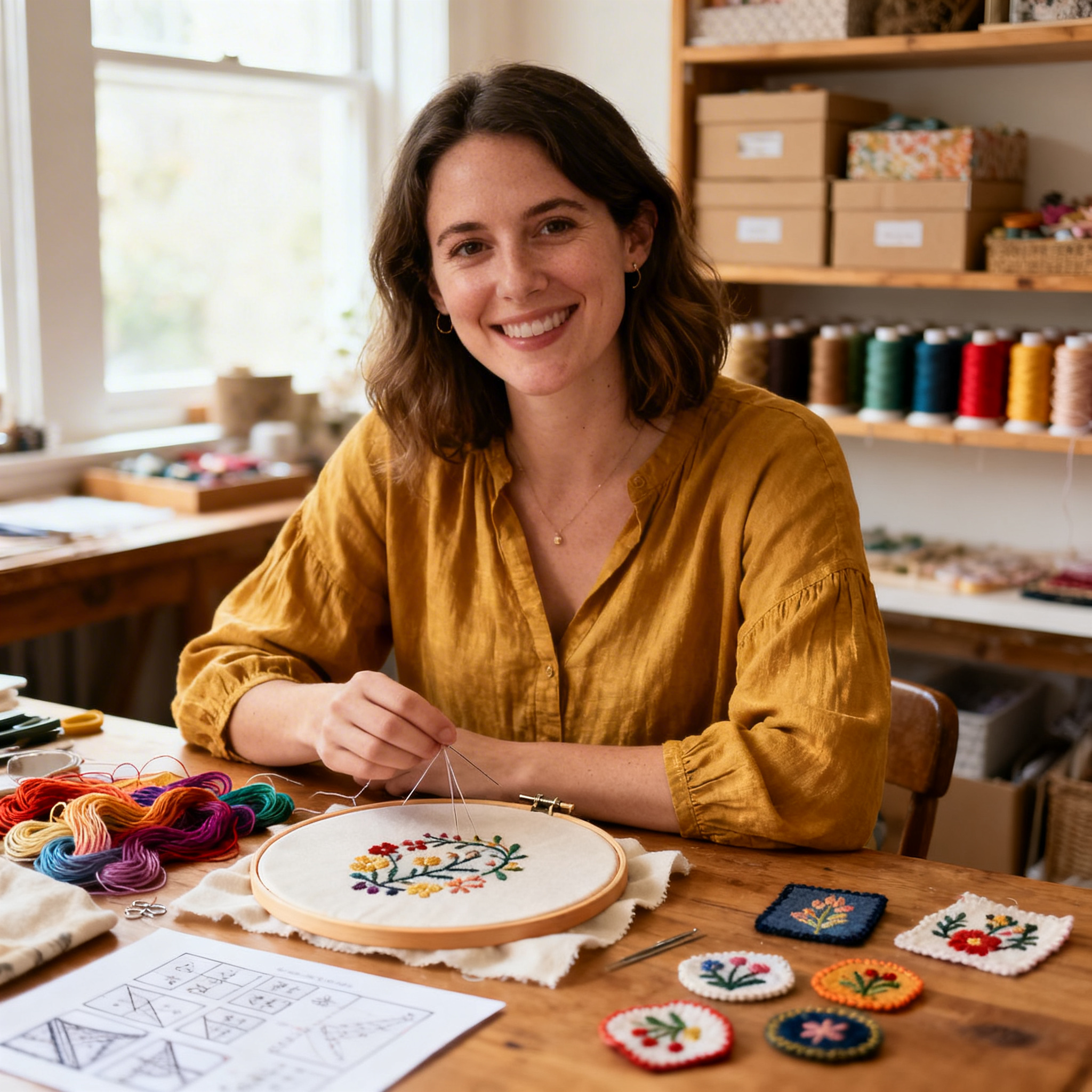
I’m Sophie Caldwell, the author behind granaboom.com, and I believe hand embroidery is one of the simplest, most relaxing ways to create something beautiful with your own hands. I started this blog to help beginners learn hand embroidery without feeling overwhelmed by complicated instructions or “perfect” results.
Here you’ll find beginner-friendly guides to decorative embroidery stitches, along with clear step-by-step practice ideas and patterns you can use to build confidence. My focus is on making the learning process easy: simple explanations, helpful stitch combinations, and small projects that look polished even when you’re just starting out.
Welcome to granaboom.com—grab your hoop, choose a few colors, and let’s stitch one line at a time.