How to Create Raised Embroidery with Padding Techniques
Materials for your raised embroidery
How to Create Raised Embroidery with Padding Techniques With the right setup, padding creates smoother height, bolder texture, and fewer frays at the edges. Plan ahead to avoid mid-project panics and keep your project moving. Knowing your exact padding level and fabric tension helps you choose what to use and how much.
If you’re new to raised embroidery with padding techniques, start with a small practice piece to feel how the layers behave and test different wadding and stitch combinations. You’ll learn which textures you love, where tensions settle, and how your fabric responds to padding, then apply that knowledge to larger projects with confidence.
Threads, needles, and fabrics
Your threads are the voice of your design. Strong, smooth threads like cotton or silk sit nicely on the surface and layer well when padding. For raised effects, thicker floss or sturdy perle cotton can build height without adding heavy bulk. Alternate between lighter strands for subtle shading and bulkier threads for bold sections. Balance is key: too thick a thread can overwhelm the fabric; too light a thread won’t hold the raised look.
Needles should be gentle with your fabric. A sharp needle eases through the base fabric, and a longer eye helps thread thicker strands. Embroidery needles are great for padding stitches, especially around curves. On loose weaves, consider a needle with a larger eye and a blunt tip to avoid snagging. For fabrics, choose medium-weight cotton or linen for a stable base; a stiffened cotton carved into a shape can help free-standing elements hold form.
Fabrics with a tight weave support padding well, but avoid stiffness that prevents stitching. Look for an evenly woven fabric with a touch of give to prevent puckering. For pieces that sit on a wall or frame, select fabrics that won’t flatten under weight. A slightly fuzzy or brushed surface can help trap padding and hide rough edges when a plush, rounded effect is desired.
Embroidery wadding and stuffing choices
Padding is your secret sauce. Wadding adds volume, while stuffing creates crisp, sculpted edges. Polyester wadding is forgiving, springs back well, and is easy to sew through—ideal for practice or decorative pieces with light wear. Lightweight batting gives a softer, cloudier feel but can compress with heavy handling.
For sharper shapes, air-dry polymer stuffing or cotton batting in small amounts holds form without overcompressing. Balance padding with fabric tension: too much padding on loose fabric shows through; too little padding flattens the raised elements. Test a few ratios on swatches to gauge what reads clearly from a normal viewing distance.
Layering can add realism: start with a thin base pad, then add thicker layers for raised areas. This changes how light catches the surface—the thicker the padding, the more dramatic the shadows and highlights. Always secure padding well so it doesn’t shift as you work the next stitches.
Materials checklist
- Thread(s): a mix of medium to thick cotton or silk floss, plus sturdy perle cotton for bold raised areas.
- Needles: embroidery needles with a comfortable grip and an appropriate size for your thread; a slightly longer eye suits thicker threads.
- Fabric: medium-weight, evenly woven cotton or linen with a little give to prevent puckering.
- Wadding/Stuffing: polyester wadding for forgiving projects; cotton batting or light stuffing for sharper shapes; test layers on swatches.
- Backing material: stabilizer or interfacing if extra support is needed to keep the piece flat after completion.
Basic padding embroidery methods
Padding embroidery makes designs pop. Start with a light touch and steady hands to keep padding from creeping or collapsing after washing. A small bump under satin or split stitches can transform a simple motif. Practice will help threads fill gaps evenly and edges stay neat. Master the basics to tackle bolder projects with confidence.
Keep the fabric taut in a hoop so padding sits evenly. Use a thread with some stiffness, like sturdy cotton or light viscose, to help the lift stay true. If stitches look flat, add a bit more padding and check tension. Padding is all about balance: not too thick, not too thin.
When planning a design, sketch where you’ll pad most and where you’ll let the fabric sit flat. Test on a scrap first to ensure a consistent height across the whole design.
Padded satin stitch basics
Padded satin stitch creates a glossy, raised line. Begin with a light layer of padding inside the shape, using tiny, even stitches, then cover with tight satin stitches that lie smoothly on top. The result is a clean, dimensional line that stands out without bulk. Practice in short sections to learn where the padding should sit for a crisp finish.
Keep the padding even to avoid ridges. If you see unevenness, flatten it gently with the needle. Use shorter stitches on curves to reduce bunching and maintain steady thread tension. If satin stitches feel crowded, back off a little and space stitches more evenly. The raised edge reads crisply when padding is balanced and edges are secured.
Choose a thread color with enough contrast to show the lift but still complement the fabric. A slightly shinier top thread can enhance light catch, while a matte top gives a subtler glow. Start with a light layer of padding and add more only where the design needs it for a professional finish.
Padding embroidery methods with split stitch
Split stitch padding builds a sturdy base with subtle texture. Start with a line of split stitches that forms the desired padding height, catching the thread as you split to keep padding neat. Once padded, cover with your decorative stitches for a cushiony underlayer and a clean top edge readable from a distance.
Keep split stitches even in length. Practice in straight lines before applying to curves. The padding under split stitches should be slightly tucked, not pulled tight, to form a gentle mound. Finish with final stitches to lock in place and prevent shifting during washing.
For small areas, use a few longer split stitches to add height without crowding. For larger areas, work in sections to maintain consistency. End with a final pass around the shape to stabilize the layer and prevent wobble when washed.
Common padding mistakes
Avoid over-padding, which makes the design bulky. Under-padding leaves gaps that ruin the effect. Check tension: too tight crinkles the fabric, too loose defeats padding. Test on scrap fabric first, then rework with even passes until height is consistent. Avoid mixing too many padding methods in one small area—aim for a single, clean height that supports the top stitches.
Stumpwork padding techniques for 3D effects
Stumpwork padding builds real depth. Stack stitches and padding so designs pop from the fabric, like a tiny cushion under the stitches. Proper padding yields a wow factor without heavy materials, giving your work a lively, sculpted feel.
Consistency matters: pad too much and the piece can look bulky; pad too little and the effect vanishes. Keep notes on what works for each motif to reuse in future projects. Your goals are clean edges, proportional shapes, and a natural lift that feels intentional.
Wire, padding, and stumpwork basics
Choose a soft, bendable wire for light shapes and firmer options for sturdier forms. Use padding under the wire to keep corners smooth and prevent snagging. Secure wire ends at anchor points before stitching over them, then add padding to maintain a neat, even surface.
Blend stumpwork stitches with padding. Satin stitches over padding yield a sleek surface, while laid work shows texture beneath. Layer different paddings—thin for delicate petals, thicker for rounded berries—to achieve varied dimensions. Always test on scrap fabric to see how your padding interacts with threads and fabric before finalizing.
Balance visibility and safety: wire can poke through edges if not managed. Tuck wire ends and secure padding so the surface remains smooth. Maintain steady tension and evenly distributed padding to keep lines clean and structure strong.
Layered and corded embroidery padding
Layered and corded padding adds depth and a polished finish. Padding acts like a subtle frame that makes colors and shapes stand out without overwhelming the fabric. This approach works well for applique, lettering, and decorative motifs.
Layered padding for embroidery shapes
Layered padding builds dimension in stages: a base layer followed by thinner layers to create gradual height. This method is ideal for curved shapes and petals, where a single thick layer would flatten the form. Varying thickness gives a more lifelike look and reads well from distance and up close. Trim excess after stitching to keep edges soft and precise. Test on scraps to dial in the right balance.
Be mindful of fabric stability when stacking layers. Start with two layers and add a third only where needed. Use a lighter color on top to avoid overpowering the base design. Layered padding provides flexibility, letting you adjust each element’s height independently for complex patterns.
How corded embroidery padding works
Corded padding sews a tight cord into the padding as a raised ridge to define the shape. Place the cord before padding, then fill around it with stitching for a crisp edge that catches light with subtle shadows. Start with a thin cord for delicate designs, moving to thicker cords for bolder statements. Maintain steady tension so the cord sits snugly without wobbling.
Padding around the cord is usually layered for extra lift. One or more padding layers beyond the cord shape the motif and keep the edge defined. Corded padding works especially well on satin, twill, and heavier fabrics where flat stitches fade. Baste or use temporary spray to keep layers from shifting during stitching.
Layered padding for embroidery shapes
Layered padding uses multiple thicknesses to mimic natural shadows and highlights. Begin with a base layer matching the silhouette, then add thinner layers to build curvature and volume. This approach suits petals, leaves, and circles where a gentle rise is preferred. Trim excess after stitching to keep edges soft and precise. Layered padding allows independent height adjustments for each element, ideal for complex patterns.
How to Create Raised Embroidery with Padding Techniques step-by-step
You’re about to add real depth to your embroidery. This step-by-step guides you through setup, layering, shaping padding, and finishing with a satin stitch that proudly sits on the fabric. By the end, you’ll know exactly How to Create Raised Embroidery with Padding Techniques for your next project.
First, choose a stable fabric and appropriate wadding. Blunt needle tips glide through without tearing. Keep threads smooth and tension steady to avoid loose edges that dull the raised effect. The goal is a smooth cushion of color and form under your stitches.
Plan your design with padding in mind. Outline the motif lightly, then lay a thin base of wadding behind the raised areas. Add padding in layers as you go, pressing lightly to avoid distorting the fabric. When satisfied with thickness, begin stitching with a dense satin stitch that locks the padding in place. The satin stitches should define the shape without overwhelming it.
Spacing and height matter. For a softer rise, use less padding and gentler shapes. For a bolder look, increase padding and tighten the outline with satin stitches. Keep the stitching measured and allow each stitch to set before continuing. The result is a dimensional embroidery that feels alive in your hands.
Prepare your fabric and embroidery wadding and stuffing
Set up a tight fabric frame with a stable base like cotton canvas or linen. Place backing under the embroidery hoop to keep things flat, then secure the top fabric. Cut the wadding slightly smaller than your design and fluff it lightly to avoid hard seams. Lay padding where the raised areas will live. If using stuffing, add it gradually to control height and lumps.
Use a fine needle and short, deliberate stitches to anchor the padding without tearing the fabric. Pad each raised zone separately to control final height. Preparation pays off when stitching begins—everything aligns and the raised areas hold their shape.
Build layers then finish with padded satin stitch for dimensional embroidery stitches
Layer padding in stages, letting each layer settle. Start satin stitching around the edge of the raised area to create a crisp boundary, then fill the middle with longer, even stitches to press the padding down and secure it. Maintain a light enough thread tension to avoid distorting the padding while still holding the shape. If a line wobbles, reposition and flatten the padding before continuing. Finish with a neat back to ensure no loose threads snag later. Trim excess padding neatly and secure loose ends.
Timing and practice tips
Timing matters—steady, consistent practice yields better results. Begin with small shapes to master padding thickness and satin-stitch control. Compare different padding heights on scraps to see what reads best from a distance. Slow down at the edges and keep stitches uniform in length and tension. With regular practice, raised embroidery becomes reliable enough to tackle more complex designs.
Finish, care, and repair for padded pieces
Finish padded pieces with a clean edge, secure padding, and stitches that stay neat over time. Treat the project like a sealant that lets it breathe and keeps the raise intact without cracking. Use bold stitches near the edges and ensure padding sits flat before stitching the final layers. A steady hand now prevents many fixes later.
Care is simple and consistent. After finishing, avoid extreme temperature changes and minimize heavy handling that could shift padding. Dust with a soft brush and store padded pieces flat or rolled between layers of tissue to prevent crushing. If padding shows through or the 3D effect looks uneven, rework the stitched areas. With care, padded embroidery remains vibrant for years.
Repair opportunities aren’t a failure—they’re longevity planning. Trim loose threads and resew with small, tight stitches. If padding shifts, reseat it with a few anchor stitches and smooth the surface before finishing. The aim is to preserve the raised effect and the fabric’s drape.
Securing padding and trimming excess
Padding should sit just under the fabric without bunching. Pin or baste first, then stitch with an even rhythm. Use short stitches near the edges to prevent shifting, and smooth padding flat before sewing. If you notice lumps, re-seat and add anchor stitches along the edges. The final silhouette should be clean, with a crisp 3D effect.
Trimming excess padding after finishing helps keep the look professional. Turn the work and check for bulk behind the embroidery. If padding is too thick, trim from the back with sharp scissors, taking off only what you need. A thin, even layer reads best for raised designs. Step back and view the piece from a distance to assess the final balance.
Washing, storage, and preserving 3D embroidery effects
Washing padded pieces requires gentle care. Hand wash in cool water with a mild detergent, then press gently—not wring. Keep the embroidery covered during rinse to protect the raised areas. If machine washing is necessary, use a delicate cycle and place the item in a mesh bag to minimize agitation. Air dry flat to maintain shape and avoid heat that could flatten padding or distort stitches. Store padded pieces flat or rolled with tissue between layers in a cool, dark place to preserve color and depth.
To maintain the raised embroidery, avoid heavy folds and excessive pressure on the padding. If storing multiple items, give each one space and cushion the surface with soft fabric. Regularly inspect for loose threads or compression marks and address them early. Proper care keeps the texture vibrant and the depth visible whenever you revisit the piece.
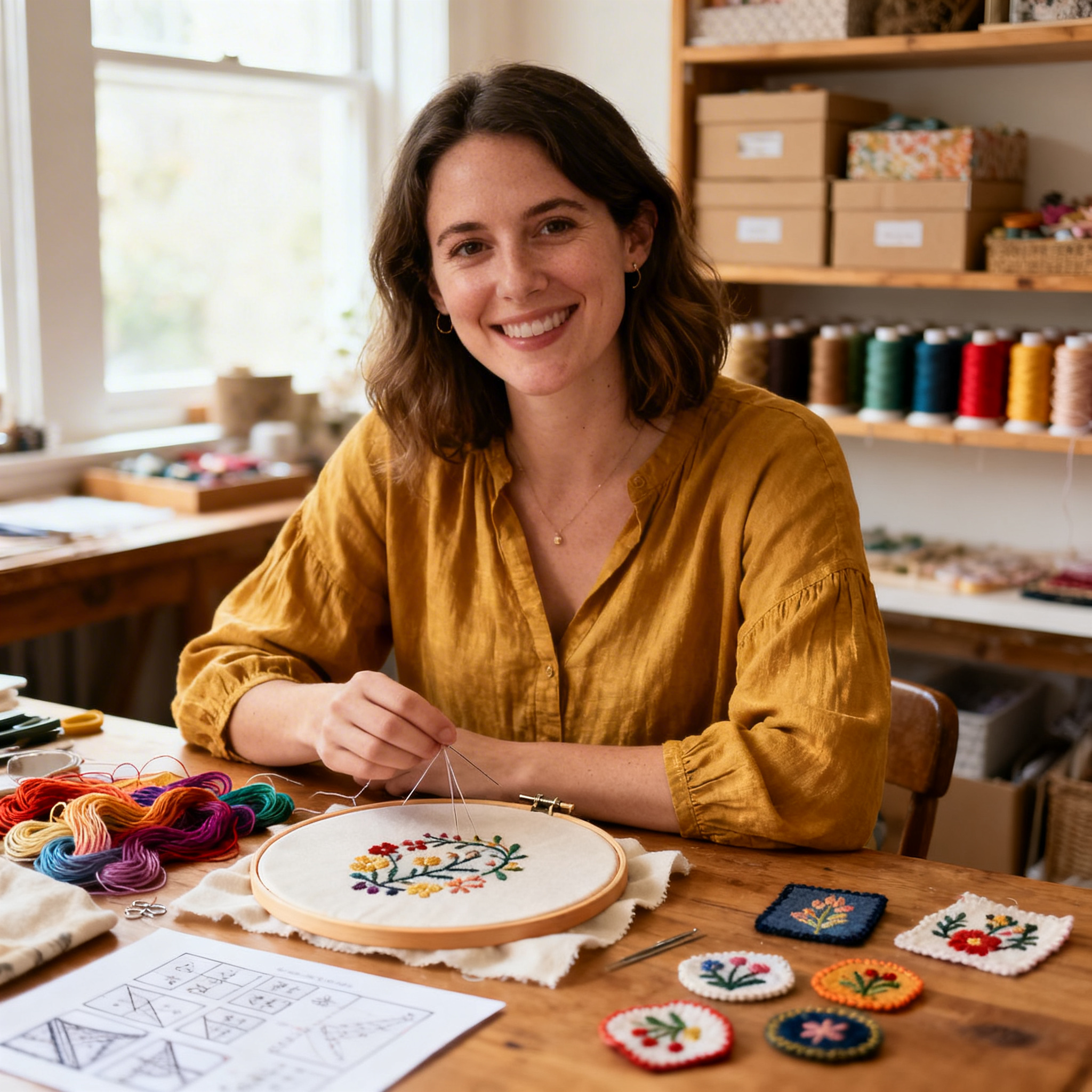
I’m Sophie Caldwell, the author behind granaboom.com, and I believe hand embroidery is one of the simplest, most relaxing ways to create something beautiful with your own hands. I started this blog to help beginners learn hand embroidery without feeling overwhelmed by complicated instructions or “perfect” results.
Here you’ll find beginner-friendly guides to decorative embroidery stitches, along with clear step-by-step practice ideas and patterns you can use to build confidence. My focus is on making the learning process easy: simple explanations, helpful stitch combinations, and small projects that look polished even when you’re just starting out.
Welcome to granaboom.com—grab your hoop, choose a few colors, and let’s stitch one line at a time.